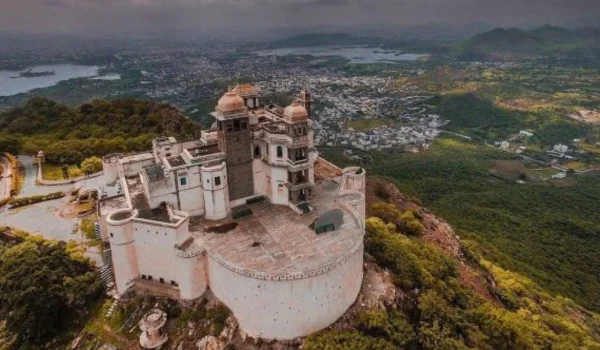
Sajjangarh Palace, popularly known as the Monsoon Palace, is one of the most recognisable heritage landmarks of Udaipur, Rajasthan. Perched on Bansdara Peak in the Aravalli Hills, the palace offers sweeping views of Udaipur, its lakes and the surrounding landscape. Built during the 19th century under Maharana Sajjan Singh of the Mewar dynasty, it was originally conceived as an astronomical centre and was also associated with observing monsoon clouds.
Today, Sajjangarh Palace is primarily known as a major tourist attraction and a viewpoint over Udaipur. Its white marble architecture, hilltop setting, royal association and spectacular sunset views make it an important part of the city’s heritage-tourism circuit.
Quick Information
| Information | Details |
| Palace Name | Sajjangarh Palace |
| Popular Name | Monsoon Palace |
| Location | Bansdara Peak, Udaipur, Rajasthan |
| City | Udaipur |
| State | Rajasthan |
| Built | Late 19th century |
| Associated With | Maharana Sajjan Singh, Mewar dynasty |
| Architectural Character | Rajput/Rajasthani palace architecture with white marble detailing |
| Property Type | Historic royal palace |
| Present Use | Heritage and tourist attraction |
| Famous For | Hilltop location, panoramic views, sunset and monsoon scenery |
| Officially Listed Timings | 9:00 AM to 5:00 PM |
| Nearest Airport | Maharana Pratap Airport |
| Nearest Railway Station | Udaipur City Railway Station |
The Government of India’s Incredible India tourism portal currently lists the Monsoon Palace’s opening hours as 9:00 AM to 5:00 PM. Visitors should still verify timings and ticket arrangements before travelling because access conditions can change.
Where Is Sajjangarh Palace Located?
Sajjangarh Palace is situated on Bansdara Peak in the Aravalli Hills, on the outskirts of Udaipur. Its elevated position is one of the property’s biggest attractions because visitors can look across the city’s lakes, surrounding hills and urban landscape from above.
The palace is also associated with the Sajjangarh Biological Park, creating an interesting combination of heritage and nature tourism in the same area.
Its location makes it particularly different from Udaipur’s lakeside palaces. While attractions such as the City Palace and Lake Palace are closely associated with Lake Pichola, Sajjangarh is defined by its hilltop setting and panoramic landscape.
History of Sajjangarh Palace
Sajjangarh Palace dates to the late 19th century and is associated with Maharana Sajjan Singh, the 72nd ruler of the Mewar dynasty. The palace was conceived as an astronomical centre, with plans connected to observing monsoon clouds and the surrounding skies.
The project was not completed exactly as originally envisioned because of Maharana Sajjan Singh’s untimely death. Nevertheless, the structure became an enduring landmark above Udaipur.
Its elevated position also gave the palace an important observational advantage. From the hilltop, the surrounding Aravalli landscape and Udaipur’s lakes could be viewed over a considerable distance.
This combination of royal ambition, astronomy, landscape observation and monsoon-related planning gives Sajjangarh a different historical identity from many of Rajasthan’s conventional fort-palace complexes.
Why Is It Called the Monsoon Palace?
The name Monsoon Palace is closely connected with the palace’s original purpose and location.
The palace was planned as an astronomical centre associated with observing monsoon clouds. Its hilltop position provided a wide field of view across the surrounding landscape, making it particularly suitable for observing changing weather patterns.
During the monsoon season, clouds and mist around the Aravalli Hills can dramatically change the appearance of the palace and its surroundings. This is one reason the property has become strongly associated with Udaipur’s monsoon scenery.
Sajjangarh Palace Architecture
Architecture is one of the strongest reasons to visit Sajjangarh Palace.
The palace features a white marble façade, towers, turrets, courtyards, stairways and decorative marble elements. The central courtyard and palace interiors reflect the grandeur associated with Mewar-era architecture. Intricate floral and leaf carvings can also be seen on marble pillars.
Major Architectural Features
Visitors can look out for:
- White marble construction and detailing
- Palace turrets and elevated viewpoints
- Central courtyard
- Decorative pillars
- Stairways and corridors
- Royal-style rooms
- Views from the upper portions of the palace
- Traditional architectural detailing
However, the most remarkable architectural feature may actually be the relationship between the palace and its natural setting. The building appears dramatically above the surrounding Aravalli landscape, creating a strong visual identity from both the city and the hill.
Views from Sajjangarh Palace
The panoramic view is arguably the palace’s biggest tourism attraction.
From the hilltop, visitors can see large sections of Udaipur and its surrounding landscape. Fateh Sagar Lake, the Aravalli Hills and parts of the city can be viewed from the palace area.
The elevated location also makes Sajjangarh particularly popular around sunset. The changing light across the lakes, hills and buildings creates one of Udaipur’s most recognisable viewpoints.
For travellers interested in landscape photography, architecture or city views, this is one of the palace’s strongest attractions.
Sajjangarh Palace and Tourism
Sajjangarh Palace plays an important role in Udaipur’s heritage-tourism ecosystem.
Udaipur is already known for its palaces, lakes, temples, museums and historic neighbourhoods. Sajjangarh adds a different experience by combining royal heritage, hill tourism, nature and panoramic sightseeing.
The palace is also frequently included in Udaipur travel itineraries alongside destinations such as:
- City Palace
- Fateh Sagar Lake
- Lake Pichola
- Jag Mandir
- Sajjangarh Biological Park
- Shilpgram
- Saheliyon Ki Bari
- Jagdish Temple
The official Incredible India tourism material specifically presents Monsoon Palace as one of the attractions worth including in an Udaipur itinerary.
Sajjangarh Palace and Sajjangarh Biological Park
One of the interesting aspects of the Sajjangarh area is its connection with wildlife and nature.
The Sajjangarh Biological Park is located around the palace area and was established in 2015. The park covers approximately 36 hectares and focuses on wildlife conservation.
This creates a distinctive tourism combination:
Heritage Palace + Aravalli Landscape + Wildlife + Scenic Views
For visitors planning a longer outing, combining the palace with the biological park can provide a broader experience of the region.
Sajjangarh Palace Timings
The current Incredible India tourism listing gives the following visiting hours:
| Day | Timing |
| Monday | 9:00 AM – 5:00 PM |
| Tuesday | 9:00 AM – 5:00 PM |
| Wednesday | 9:00 AM – 5:00 PM |
| Thursday | 9:00 AM – 5:00 PM |
| Friday | 9:00 AM – 5:00 PM |
| Saturday | 9:00 AM – 5:00 PM |
| Sunday | 9:00 AM – 5:00 PM |
The official tourism listing currently states 9:00 AM as the opening time and 5:00 PM as the closing time.
Because heritage attractions can have seasonal, weather-related or operational changes, visitors should confirm the latest timings before travelling.
Sajjangarh Palace Entry Fee
Entry charges can change depending on visitor category, vehicle access and local tourism arrangements. The sources consulted for this article do not provide a sufficiently reliable current 2026 fee table to state exact prices.
Therefore, visitors should verify the latest entry fee and vehicle charges before visiting rather than relying on older travel websites.
This is particularly important because tourism information for the Sajjangarh area may distinguish between palace entry and access-related charges. An official Incredible India guide also notes that visitors travelling by vehicle may need separate vehicle tickets.
How to Reach Sajjangarh Palace
By Air
The nearest major airport is Maharana Pratap Airport (UDR), Udaipur.
From the airport, visitors can continue towards Udaipur and then travel by road towards the Sajjangarh hill area.
By Train
The nearest major railway station listed by Incredible India is Udaipur City Railway Station (UDZ).
From the railway station, visitors can use local taxis or other road transport to reach the palace area.
By Road
Sajjangarh Palace is accessible by road from Udaipur. Because the palace is located on a hill, the final part of the journey involves travelling uphill towards the property.
Visitors using private vehicles should check the latest access and vehicle-ticketing rules before starting their trip.
Best Time to Visit Sajjangarh Palace
The best time depends on what you want to experience.
For Comfortable Sightseeing
The cooler months generally provide more comfortable conditions for exploring Udaipur’s outdoor attractions and hilltop viewpoints.
For Monsoon Views
The monsoon season can give Sajjangarh a completely different appearance. Clouds, mist and greenery around the Aravalli Hills reinforce the palace’s identity as the Monsoon Palace.
For Sunset
If sunset viewing is the main objective, visitors should plan carefully around the palace’s operating hours. Since the listed closing time is 5:00 PM, it is important to check the sunset season and current closing/access arrangements rather than assuming that the palace will remain open until sunset.
Nearby Places to Visit
Sajjangarh Palace can easily be combined with other Udaipur attractions.
Sajjangarh Biological Park
Located in the same broader hill area, the biological park provides a wildlife and nature experience alongside the palace visit.
Fateh Sagar Lake
Fateh Sagar Lake is one of Udaipur’s best-known lakes and is particularly visible from elevated viewpoints around Sajjangarh.
City Palace
Udaipur’s City Palace is another major heritage attraction. It stands beside Lake Pichola and represents the long architectural development of the Mewar royal complex.
Lake Pichola
Lake Pichola is central to Udaipur’s tourism identity and is surrounded by several important heritage landmarks.
Shilpgram
Shilpgram provides an opportunity to explore Rajasthan’s traditional arts, crafts and cultural traditions.
Business and Economic Importance of Sajjangarh Palace
Sajjangarh Palace is not simply a historic building. Its tourism value contributes indirectly to the wider Udaipur hospitality and tourism economy.
A popular heritage attraction can generate demand across several connected sectors, including:
- Hotels and resorts
- Restaurants and cafés
- Taxi and local transportation services
- Tour operators
- Tourist guides
- Photography services
- Travel agencies
- Handicraft and souvenir businesses
- Event and wedding-related businesses
- Local retail
These should be understood as indirect economic opportunities around the tourist destination rather than services necessarily operated by Sajjangarh Palace itself.
The palace’s inclusion in Udaipur’s broader tourism circuit also means visitors may combine it with multiple other attractions during the same trip, increasing the potential economic impact on local hospitality and transport businesses.
Heritage Conservation and Insurance Perspective
Historic palaces require a different approach to risk management compared with ordinary commercial buildings.
A heritage property such as Sajjangarh can potentially face risks associated with:
- Fire
- Extreme weather
- Structural deterioration
- Visitor accidents
- Natural disasters
- Restoration work
- Damage to historic architectural elements
- Public liability
For owners or authorities managing heritage properties, appropriate property insurance, public liability coverage, fire-related protection and specialised heritage-risk planning can form part of a broader conservation strategy.
However, there is no reliable basis in the sources used here to claim that Sajjangarh Palace currently holds any particular insurance policy. The above points are general considerations for heritage-property management.
Things to Know Before Visiting
Keep these points in mind when planning a visit:
- Check timings before travelling, particularly during extreme weather or special events.
- Verify the latest entry fee because ticket prices and access arrangements can change.
- Check whether separate vehicle charges apply.
- Wear comfortable footwear because the attraction involves a hilltop setting and walking.
- Allow sufficient time to enjoy both the palace and surrounding views.
- If visiting during the monsoon, be prepared for changing weather conditions.
- Do not assume that the palace will remain open until sunset simply because sunset views are popular.
- Follow the site’s photography, visitor and conservation rules.
FAQs
- Where is Sajjangarh Palace located?
Sajjangarh Palace is located on Bansdara Peak in the Aravalli Hills near Udaipur, Rajasthan.
- Why is Sajjangarh Palace called the Monsoon Palace?
It is popularly called the Monsoon Palace because its original planning was associated with observing monsoon clouds and its hilltop setting provides extensive views of the surrounding landscape.
- Who built Sajjangarh Palace?
The palace is associated with Maharana Sajjan Singh, the 72nd ruler of the Mewar dynasty, and dates to the late 19th century.
- What are Sajjangarh Palace timings?
The current Incredible India listing gives the visiting hours as 9:00 AM to 5:00 PM. Visitors should verify the latest schedule before travelling.
- Is Sajjangarh Palace worth visiting?
Yes, particularly for visitors interested in heritage architecture, Udaipur’s royal history, Aravalli landscapes and panoramic city views. Its hilltop location gives it a character that is different from Udaipur’s lakeside palaces.
- What can you see from Sajjangarh Palace?
Visitors can enjoy panoramic views of Udaipur, Fateh Sagar Lake and the surrounding Aravalli landscape. The palace itself also features white marble architecture, courtyards, stairways, towers and decorative details.
Final Thoughts
Sajjangarh Palace occupies a distinctive place in Udaipur’s heritage landscape. Unlike palaces positioned directly around the city’s lakes, it rises above the city from the Aravalli Hills, giving visitors a combination of architecture, royal history and panoramic scenery. Its connection with Maharana Sajjan Singh and its original astronomical and monsoon-related purpose make its story particularly interesting.
Today, the Monsoon Palace is an important part of Udaipur’s tourism circuit and also contributes indirectly to the city’s wider hospitality and local business ecosystem. Its proximity to Sajjangarh Biological Park further strengthens the area’s combination of heritage and nature tourism. For Corporate Palace, Sajjangarh represents exactly the kind of property where heritage, tourism, architecture, conservation and the local economy intersect, making it more than just another historic building in Rajasthan.