The Grand Palace Srinagar, now known as The LaLiT Grand Palace Srinagar, is one of Kashmir’s notable heritage palace properties. Located on Gupkar Road in Srinagar, the former royal residence overlooks Dal Lake and is surrounded by the Himalayan landscape. Originally built in 1910 by Maharaja Pratap Singh, the property was associated with the Dogra royal family and later transformed into a luxury heritage hotel. Today, it combines royal-era architecture, historic interiors, landscaped gardens and modern hospitality. Its connection with Kashmir’s royal history, association with important historical personalities, luxury accommodation and destination-wedding facilities make it significant for tourism as well as the wider hospitality economy.
Quick Information
| Information | Details |
| Palace Name | The LaLiT Grand Palace Srinagar |
| Former Name | Gulab Bhavan |
| Location | Gupkar Road, Srinagar, Jammu & Kashmir |
| City | Srinagar |
| State/UT | Jammu & Kashmir |
| Built | 1910 |
| Built By | Maharaja Pratap Singh |
| Associated With | Dogra royal family |
| Property Type | Historic royal palace and heritage hotel |
| Present Use | Luxury hotel, dining, weddings and events |
| Rooms & Suites | 113, including 10 cottages |
| Event Space | More than 4,000 sq ft |
| Famous For | Royal heritage, Dal Lake views, Chinar trees and palace architecture |
| Check-in | 2:00 PM |
| Check-out | 12:00 Noon |
| Entry Fee | No regular monument entry ticket |
Where Is The Grand Palace Srinagar Located?
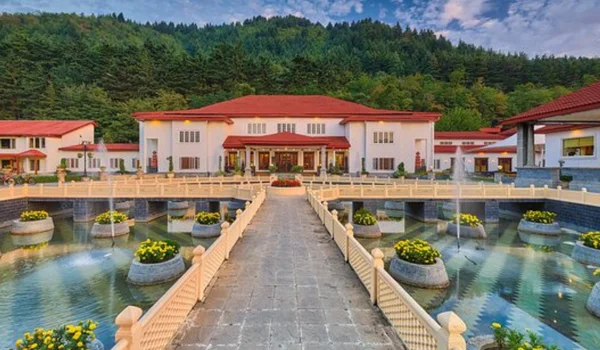
The Grand Palace is situated on Gupkar Road in Srinagar, one of the city’s prominent areas. The property occupies a scenic location overlooking Dal Lake and surrounded by the Himalayan landscape.
Its location is particularly attractive for travellers because several important Srinagar attractions can be reached from the Gupkar Road area. The palace also provides an opportunity to experience Kashmir’s heritage while staying close to the city’s major tourism zones.
The property is officially identified as The LaLiT Grand Palace, Gupkar Road, Srinagar, Jammu & Kashmir.
History of The Grand Palace Srinagar
The history of The Grand Palace goes back to the period of the Dogra rulers of Jammu and Kashmir.
The palace was built in 1910 by Maharaja Pratap Singh. It was originally known as Gulab Bhavan and served as a royal residence.
Maharaja Hari Singh, who succeeded Pratap Singh, was also closely associated with the development and decoration of the property. The palace became an important residence for the ruling family during their time in Srinagar.
The property subsequently went through a major transformation. After the end of the princely era, the royal residence was converted into a hotel. Bharat Hotels later took over the property and carried out restoration work, helping bring the historic building back into active use as a heritage hospitality property.
This transition from royal residence to hotel is an important part of its modern identity.
The Grand Palace and India’s Modern History
The palace is also associated with important personalities from India’s modern history.
One of its best-known historical features is the Chinar tree in the palace courtyard. According to the hotel’s historical account, Mahatma Gandhi met Maharaja Hari Singh under this tree.
The property has also hosted distinguished visitors over the years, including diplomatic representatives and prominent personalities.
Because of these associations, the palace is not simply a luxury hotel. It also represents an important connection between Kashmir’s royal period and the political and social history of twentieth-century India.
Architecture of The Grand Palace
The architecture of The Grand Palace reflects the period in which it was developed and incorporates elements associated with Kashmir and the Dogra royal tradition along with European influences.
The two-storey palace building is surrounded by extensive landscaped grounds. Its design includes spacious areas, verandahs, decorative interiors and large windows that help connect the building with its scenic surroundings.
The interior character is particularly important to the property’s heritage identity. Antique furniture, traditional carpets, rich upholstery, local handicrafts and period-style decorative elements are used to maintain a royal atmosphere.
The surrounding gardens are equally significant. Large lawns, mature Chinar trees and views towards Dal Lake create a setting that distinguishes the palace from conventional city hotels.
What Can You Experience at The Grand Palace?
Unlike a public palace museum, The Grand Palace primarily functions as a luxury hotel. Therefore, the experience is centred on hospitality, heritage surroundings and accommodation.
Visitors and guests can experience:
- Historic palace architecture
- Heritage-style interiors
- Antique furniture and fittings
- Traditional Kashmiri decorative elements
- Landscaped gardens
- Chinar trees
- Views towards Dal Lake
- Palace-style rooms and suites
- Dining facilities
- Wedding and event venues
- Wellness and leisure facilities
Access to different areas may depend on whether a person is staying at the hotel, attending an event or using another service.
The Grand Palace as a Heritage Hotel
The modern identity of the property is closely connected with its role as a heritage hotel.
The hotel currently offers 113 palace rooms and suites, including 10 cottages. These accommodations combine modern facilities with traditional design elements.
Accommodation options include palace rooms, suites and cottages. Some of the cottages provide additional space and garden-oriented surroundings.
The hotel’s approach demonstrates how an old royal property can be adapted for contemporary travellers without completely removing its historic character.
This type of adaptive reuse is increasingly important in the heritage-hospitality sector because it can allow historic buildings to remain economically active while preserving their cultural identity.
Dining and Hospitality
The Grand Palace also has a significant dining component.
The property includes The Chinar, a multi-cuisine restaurant, along with The Chinar Garden and Dal Bar.
Dining at the property benefits from its scenic setting and heritage environment. For visitors staying in Srinagar, this provides an opportunity to combine accommodation, food and heritage experiences within the same property.
The hospitality offering also supports different categories of travellers, including families, couples, leisure tourists, business visitors and groups attending private events.
Weddings and Events at The Grand Palace
The Grand Palace has strong relevance for destination weddings in Kashmir.
The combination of palace architecture, landscaped gardens, mountain scenery and views towards Dal Lake creates a distinctive environment for weddings and celebrations.
The property also has banquet and conference facilities covering more than 4,000 square feet of event space.
Potential event uses include:
- Destination weddings
- Wedding receptions
- Private celebrations
- Corporate meetings
- Conferences
- Business gatherings
- Social events
Event menus, decoration arrangements, availability and venue policies can change, so these details should always be confirmed before making a booking.
Why Is The Grand Palace Important for Businesses?
The Grand Palace contributes to Srinagar’s broader tourism and hospitality economy.
A heritage hotel of this type can create direct and indirect demand for several sectors. These may include:
- Wedding planners
- Event decorators
- Photographers
- Travel agencies
- Tour operators
- Local transport providers
- Tourist guides
- Restaurants and cafés
- Handicraft sellers
- Local artisans
- Hospitality workers
- Event suppliers
These are indirect economic opportunities connected with tourism and events. They should not be understood as businesses operated directly by the palace.
The property also helps strengthen Srinagar’s position as a destination for luxury tourism, heritage stays, weddings and business gatherings.
Finance and Investment Perspective
The Grand Palace provides an interesting example of heritage-property adaptive reuse.
A historic royal residence can be expensive to maintain if it has no sustainable economic use. Converting an appropriate heritage property into a hotel can create an operating model where accommodation, dining and events help support continued maintenance.
From a broader hospitality perspective, heritage properties can potentially generate revenue through:
- Hotel accommodation
- Premium suites
- Restaurants
- Events
- Destination weddings
- Conferences
- Cultural experiences
- Tourism partnerships
However, this should not be interpreted as an investment recommendation for The Grand Palace. There is no basis to assume that the property itself is available for public investment or to claim specific returns, property values or profitability.
Insurance Considerations for Palace Properties
Historic palace hotels have specialised risk considerations because they combine heritage structures with modern commercial operations.
General insurance requirements for properties of this nature may include:
- Property insurance
- Fire insurance
- Public liability insurance
- Business interruption insurance
- Event insurance
- Employee-related coverage
- Protection against certain natural disaster risks
- Restoration-related risk protection
These are general industry considerations. They do not confirm which insurance policies are maintained by The Grand Palace.
Timings
The Grand Palace is a functioning hotel rather than a conventional public monument.
Current hotel check-in and check-out timings are:
| Service | Timing |
| Check-in | 2:00 PM |
| Check-out | 12:00 Noon |
Early check-in and late check-out may depend on availability and hotel policy.
There is no standard day-wise sightseeing timetable comparable to a public museum. People visiting for dining, events or other purposes should confirm access arrangements in advance.
Entry Fee
The Grand Palace does not have a standard tourist entry fee like a public monument.
The reason is that the property currently operates as a luxury heritage hotel rather than a publicly accessible palace museum.
Access to the property may depend on a confirmed hotel stay, dining arrangement, event attendance or another permitted purpose.
Visitors should therefore not assume that all palace areas are freely accessible for sightseeing.
How to Reach The Grand Palace Srinagar
By Road
Road travel is the most practical way to reach the property. The palace is located on Gupkar Road and can be reached by private vehicles, taxis and other local transport.
By Air
Srinagar Airport is the main airport serving the city. Travellers arriving by air can continue to the palace by taxi or other road transportation.
By Train
Visitors using rail services can travel towards Srinagar and continue by road depending on their arrival point and current railway connectivity.
Because Kashmir travel conditions can vary by season, visitors should consider current road and weather conditions when planning their journey.
Nearby Places
The location of The Grand Palace makes several important Srinagar attractions accessible.
Dal Lake
Dal Lake is one of Srinagar’s most famous attractions and is an important part of the landscape surrounding the palace.
Chashme Shahi
Chashme Shahi is a historic Mughal garden and one of Srinagar’s notable heritage attractions.
Nishat Bagh
Nishat Bagh is another famous Mughal garden overlooking Dal Lake and is known for its landscaped terraces.
Shalimar Bagh
Shalimar Bagh is an important Mughal garden and forms part of Srinagar’s historic garden landscape.
Pari Mahal
Pari Mahal is a historic terraced garden situated on the hills above Srinagar and offers broad views of the surrounding area.
Tulip Garden
The Indira Gandhi Memorial Tulip Garden becomes especially attractive during the annual tulip flowering season.
Best Time to Visit The Grand Palace Srinagar
The ideal time depends on the type of experience a visitor wants.
Spring is excellent for gardens and flowers, particularly when Srinagar’s famous tulips are in bloom.
Summer is suitable for sightseeing, outdoor activities and enjoying the palace gardens and surrounding attractions.
Autumn offers a particularly attractive experience because the Chinar trees develop striking seasonal colours.
Winter provides a colder Kashmir experience and can be appealing to travellers interested in the winter landscape. However, weather and road conditions should be considered carefully.
For weddings and events, the best period depends on the desired weather, event schedule and venue availability.
Things to Know Before Booking
Before booking a stay or event at The Grand Palace, consider the following:
- Confirm current room rates and availability.
- Check the exact event venue and available dates.
- Ask about food and beverage arrangements.
- Confirm decoration and outside-vendor policies.
- Review cancellation and payment conditions.
- Check transportation arrangements for large groups.
- Confirm access rules if you are not staying at the hotel.
- Consider Kashmir’s seasonal weather when planning travel.
FAQs
Where is The Grand Palace Srinagar located?
The Grand Palace, now known as The LaLiT Grand Palace Srinagar, is located on Gupkar Road in Srinagar, Jammu & Kashmir.
Who built The Grand Palace Srinagar?
The palace was built by Maharaja Pratap Singh in 1910 and was associated with the Dogra royal family.
What was The Grand Palace originally called?
The property was originally known as Gulab Bhavan.
Is The Grand Palace Srinagar a heritage hotel?
Yes. The former royal residence has been converted into a luxury heritage hotel and is currently operated as The LaLiT Grand Palace Srinagar.
How many rooms does The Grand Palace Srinagar have?
The property currently has 113 palace rooms and suites, including 10 cottages.
Can weddings be organised at The Grand Palace Srinagar?
Yes. The property has wedding and event facilities and is positioned as a destination for weddings, celebrations and corporate gatherings.
Final Thoughts
The Grand Palace Srinagar represents a successful example of the transition from royal residence to heritage hospitality property. Built in 1910 by Maharaja Pratap Singh and historically associated with the Dogra royal family, the palace retains important connections with Kashmir’s royal and modern history. Its architecture, antique interiors, Chinar trees, gardens and Dal Lake setting give it a distinctive identity among India’s palace hotels. Its present role extends beyond accommodation, with dining, weddings, conferences and other hospitality activities contributing to Srinagar’s tourism economy. From a Corporate Palace perspective, the property is particularly interesting because it demonstrates how heritage buildings can remain commercially relevant through adaptive reuse while continuing to represent a region’s cultural and architectural legacy.