Vijay Vilas Palace, also known as Vijaya Vilas Palace, is a historic royal palace located near Mandvi in Kutch, Gujarat. Built between 1920 and 1929 during the reign of Maharao Shri Khengarji III, it was created as a summer residence for his son and heir, Yuvraj Shri Vijayaraji. The palace is known for its red sandstone architecture, detailed stone carvings, domes, jalis, coloured-glass windows, landscaped gardens and coastal setting. Its private beach and heritage accommodation facilities also give it importance from a tourism and hospitality perspective. The palace has further become popular because several Indian films have used its distinctive architecture and surroundings as filming locations.
Quick Information
| Information | Details |
| Palace Name | Vijay Vilas Palace / Vijaya Vilas Palace |
| Location | Near Mandvi, Kutch, Gujarat |
| City | Mandvi |
| State | Gujarat |
| Construction | 1920–1929 |
| Built During | Reign of Maharao Shri Khengarji III |
| Built For | Yuvraj Shri Vijayaraji |
| Architectural Style | Rajput architecture with regional influences |
| Main Material | Red sandstone |
| Property Type | Historic royal palace |
| Present Significance | Heritage and tourism attraction |
| Famous For | Royal architecture, gardens, private beach and film shoots |
| Nearest Major City | Bhuj |
| Suggested Visit Duration | Around 2 hours |
Where Is Vijay Vilas Palace Located?
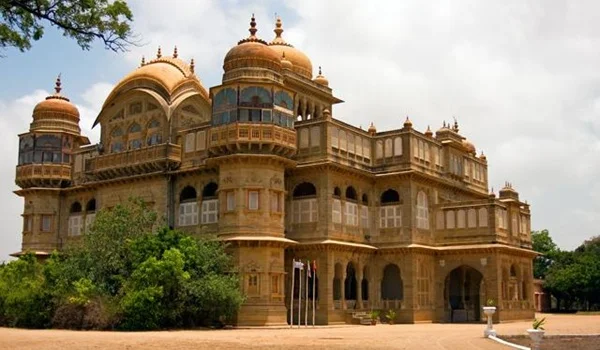
Vijay Vilas Palace is located around 7 km west of Mandvi in Kutch district, Gujarat. The palace stands within an extensive estate surrounded by orchards and is situated close to the Arabian Sea.
Mandvi is an important coastal destination in Kutch. The town is known for its beach, traditional handicrafts, markets and historic shipbuilding activity. Because of this location, visitors can combine a palace visit with several other attractions around Mandvi.
The palace’s coastal setting is one of its major attractions. Its gardens, architecture and proximity to the sea give it a different character from many royal palaces located in urban areas.
Vijay Vilas Palace History
The history of Vijay Vilas Palace is closely connected with the former royal family of Kutch.
Construction began in 1920 during the reign of Maharao Shri Khengarji III. The palace was designed as a summer retreat for his son and heir, Yuvraj Shri Vijayaraji. Construction was completed in 1929, and the property was named Vijaya Vilas Palace after him.
The palace was intended to provide the royal family with a comfortable summer residence away from the hotter inland areas. Its location near the coast, open gardens and carefully planned ventilation were particularly suitable for this purpose.
Yuvraj Shri Vijayaraji died in 1948. A decorative chhatri was later maintained on the palace premises in his memory.
The palace has remained associated with the Kutch royal family and continues to have an important place in the heritage story of the region.
Architecture of Vijay Vilas Palace
Architecture is one of the main reasons Vijay Vilas Palace attracts visitors.
The palace is constructed largely from red sandstone and incorporates numerous features associated with Rajput palace architecture. Its design also shows influences from other parts of India.
Important architectural elements include:
- A high central dome supported by pillars
- Smaller Bengal-style domes
- Domed bastions at the corners
- Intricately carved stone jalis
- Jharokhas
- Chhatris
- Decorative chhajjas
- Coloured-glass windows
- Stone-carved door and window panels
- Murals and decorative details
- Extended entrance porch
- Marble fountains
- Water channels
- Landscaped gardens
The design draws considerably from the palace traditions of Orchha and Datia. Craftsmen from Jaipur, Bengal and Saurashtra, along with local Kutch artisans, contributed to the palace’s decorative work.
This mixture of regional craftsmanship gives Vijay Vilas Palace a distinctive architectural identity.
Gardens and Coastal Landscape
The palace is surrounded by well-maintained gardens containing water channels, lawns and marble fountains. The greenery provides an attractive setting for the red sandstone structure.
Another distinctive feature is the palace’s private beach. The combination of royal architecture, gardens and coastline makes the property particularly appealing to visitors interested in heritage photography and scenic landscapes.
The upper balcony and rooftop area also provide broad views of the surrounding estate. The palace’s small carved windows were designed in a way that allowed cool sea air to circulate through the building.
Vijay Vilas Palace and Film Tourism
Vijay Vilas Palace has developed an additional identity as a film-shooting location.
Its royal architecture and coastal surroundings have attracted Indian filmmakers. Popular movies such as Hum Dil De Chuke Sanam, Lagaan and Commando have been associated with filming at the palace.
This connection with cinema has helped introduce Vijay Vilas Palace to audiences outside Gujarat. For film enthusiasts, visiting the palace can therefore provide an additional reason to explore the property.
Film tourism can also benefit the surrounding economy by increasing demand for local transport, accommodation, restaurants, guides and other visitor services.
Vijay Vilas Palace as a Heritage Tourism Property
The palace is not simply an architectural attraction. Its wider estate has tourism and hospitality relevance.
The palace estate includes a privately operated beach accommodation facility designed around the appearance of a royal guest camp. Gujarat Tourism describes air-conditioned tented accommodation, attached bathrooms, a multi-cuisine restaurant and beach facilities associated with the estate.
This creates a connection between heritage conservation, tourism and hospitality.
The wider tourism ecosystem around the palace can support indirect business opportunities for:
- Hotels and accommodation providers
- Restaurants and cafés
- Travel agencies
- Local taxi operators
- Tourist guides
- Photographers
- Handicraft sellers
- Event-related businesses
- Local transport providers
- Hospitality workers
These are wider economic opportunities connected with tourism and should not be assumed to be services directly operated by the palace.
Vijay Vilas Palace Timings
A government film-location listing currently gives the following visitor hours:
| Day | Timings |
| Monday | 9:00 AM–1:00 PM and 3:00 PM–6:00 PM |
| Tuesday | 9:00 AM–1:00 PM and 3:00 PM–6:00 PM |
| Wednesday | 9:00 AM–1:00 PM and 3:00 PM–6:00 PM |
| Thursday | 9:00 AM–1:00 PM and 3:00 PM–6:00 PM |
| Friday | 9:00 AM–1:00 PM and 3:00 PM–6:00 PM |
| Saturday | 9:00 AM–1:00 PM and 3:00 PM–6:00 PM |
| Sunday | 9:00 AM–1:00 PM and 3:00 PM–6:00 PM |
Visitors should verify the latest timings before travelling because opening arrangements can change due to maintenance, private functions or other circumstances.
Vijay Vilas Palace Entry Fee
Current published information lists the following charges:
| Visitor Item | Listed Charge |
| Entry | ₹20 |
| Still Camera | ₹50 |
| Private Vehicle | ₹10 |
Fees can change, so visitors should confirm the applicable charges before their visit.
How to Reach Vijay Vilas Palace
By Road
Road travel is the most convenient way to reach Vijay Vilas Palace.
The palace is around 7 km from Mandvi. Mandvi is approximately 58 km southwest of Bhuj. Local taxis and other road transport can be used to travel between Mandvi and the palace.
By Train
Bhuj is an important railway point for travellers visiting the Kutch region. From Bhuj, visitors can continue by road towards Mandvi.
By Air
Bhuj Airport is the nearest major airport serving travellers visiting the region. From the airport, visitors can travel by road towards Mandvi and Vijay Vilas Palace.
Nearby Places to Visit
A visit to Vijay Vilas Palace can be combined with other attractions in and around Mandvi.
Mandvi Beach
Mandvi Beach is one of the best-known attractions in the area. Visitors can enjoy the coastline, sunset views and various recreational activities.
Mandvi Town
Mandvi’s markets are useful for experiencing local culture and shopping for regional handicrafts and products.
Traditional Shipbuilding Yards
Mandvi has a long maritime tradition, and its traditional wooden dhow-building activity is an interesting attraction for visitors interested in local craftsmanship.
Prag Mahal
Located in Bhuj, Prag Mahal is another important historic building that can be included in a wider Kutch heritage itinerary.
Aina Mahal
Aina Mahal in Bhuj is another notable palace associated with the history and royal heritage of Kutch.
Best Time to Visit Vijay Vilas Palace
The cooler months are generally more comfortable for exploring Mandvi and the surrounding Kutch region.
October to March is a practical period for visiting because the weather is more suitable for outdoor sightseeing. Visitors planning to explore the gardens and coastal areas should preferably avoid the hottest part of the day.
Early morning and late afternoon can be pleasant for photography and outdoor exploration.
Business and Economic Importance
Vijay Vilas Palace contributes to the tourism economy of Mandvi and Kutch by attracting visitors interested in heritage, architecture, beaches and cinema.
Its importance can extend beyond the palace itself. Visitors often require accommodation, transportation, food, shopping and sightseeing services. This creates indirect demand for local businesses.
The property also demonstrates how historic heritage assets can have economic value without losing their cultural identity. Hospitality, tourism and film-related activities can all contribute to the wider commercial ecosystem surrounding a heritage destination.
Heritage Conservation and Insurance Considerations
Historic properties such as Vijay Vilas Palace require ongoing attention because their architectural elements are often difficult and expensive to restore.
From a general heritage-property perspective, important risks can include:
- Fire
- Natural disasters
- Structural deterioration
- Weather-related damage
- Visitor-related accidents
- Damage to historic interiors
- Restoration and maintenance costs
Property insurance, public liability insurance, fire protection and appropriate event-related coverage can be relevant considerations for heritage properties. However, the specific insurance arrangements of Vijay Vilas Palace should not be assumed without verified information.
Things to Know Before Visiting
- Check the latest opening hours before travelling.
- Confirm the current entry fee and photography charges.
- Carry water during warmer weather.
- Keep sufficient time for exploring the palace and surrounding area.
- Follow photography and visitor rules.
- Respect areas that may be reserved for private use.
- Combine the palace visit with Mandvi’s beach and other attractions.
FAQs
Where is Vijay Vilas Palace located?
Vijay Vilas Palace is located approximately 7 km west of Mandvi in Kutch district, Gujarat.
Who built Vijay Vilas Palace?
The palace was built during the reign of Maharao Shri Khengarji III as a summer residence for his son and heir, Yuvraj Shri Vijayaraji.
When was Vijay Vilas Palace built?
Construction began in 1920 and was completed in 1929.
What is Vijay Vilas Palace famous for?
The palace is famous for its red sandstone architecture, carved jalis, domes, coloured-glass windows, gardens, coastal setting and private beach. It is also known as a filming location for Indian movies.
What are the timings of Vijay Vilas Palace?
Published visitor information lists the timings as 9:00 AM to 1:00 PM and 3:00 PM to 6:00 PM. Visitors should confirm the latest schedule before visiting.
Is Vijay Vilas Palace worth visiting?
Yes. It is particularly suitable for people interested in royal heritage, architecture, photography, coastal landscapes and Indian cinema. Its combination of palace architecture and seaside surroundings makes it a distinctive attraction in Kutch.
Final Thoughts
Vijay Vilas Palace is one of the most distinctive heritage attractions around Mandvi and represents an important part of Kutch’s royal architectural legacy. Built between 1920 and 1929 for Yuvraj Shri Vijayaraji, the palace combines red sandstone construction, Rajput architectural elements, detailed craftsmanship and a carefully planned garden landscape.
Its private beach and hospitality facilities add a modern tourism dimension, while its association with Indian cinema has helped broaden its popularity. The palace also demonstrates how heritage properties can contribute to the local economy through tourism, hospitality, transportation, handicrafts and related services.
For travellers exploring Kutch, Vijay Vilas Palace offers a combination of royal history, architecture, nature and cultural tourism. For Corporate Palace, it is an excellent example of how a historic royal property can remain relevant to India’s heritage, tourism and business ecosystem.