Hari Niwas Palace is a historic royal property in Jammu, Jammu and Kashmir, associated with Maharaja Hari Singh, the last reigning Maharaja of Jammu and Kashmir. Located on Palace Road, the property overlooks the Tawi River valley and offers views towards the surrounding hills. Unlike many older Rajasthani palaces, Hari Niwas reflects the architectural transition of the Dogra royal family into the modern era, with strong Art Deco and European influences. The historic palace was later adapted into a heritage hotel, allowing visitors to experience its royal surroundings while using modern hospitality facilities. Its location also makes it a useful base for exploring Jammu’s palaces, temples, forts and cultural attractions.
Quick Information
| Information | Details |
| Property Name | Hari Niwas Palace |
| Location | Palace Road, Jammu, Jammu and Kashmir |
| Property Type | Historic palace and heritage hotel |
| Associated Royal Figure | Maharaja Hari Singh |
| Historical Period | Early 20th century |
| Architectural Style | Art Deco with European influences |
| Hotel Conversion | 1990 |
| Accommodation | Heritage rooms and suites |
| Nearby Landmark | Amar Mahal Palace Museum |
| Major View | Tawi River valley and surrounding hills |
| Nearest Airport | Jammu Airport |
| Nearest Railway Station | Jammu Tawi Railway Station |
Where Is Hari Niwas Palace Located?
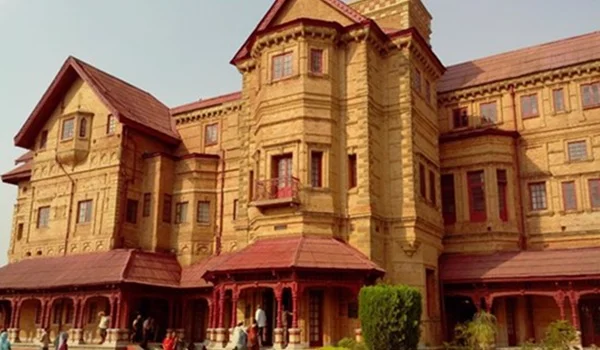
Hari Niwas Palace is situated on Palace Road in Jammu. The property occupies an elevated location and is surrounded by landscaped grounds and mature greenery.
Its setting is one of the most attractive aspects of the palace. The property is positioned near the Tawi River valley, while the Trikuta hills can be seen in the wider landscape.
The location is also convenient for visitors interested in Jammu’s royal and cultural heritage. Amar Mahal Palace Museum is located within the same broader palace complex, while other historic attractions such as Mubarak Mandi Palace are accessible from the area.
History of Hari Niwas Palace
Hari Niwas Palace is closely connected with Maharaja Hari Singh, who ruled the princely state of Jammu and Kashmir from 1925 until 1947.
The palace was developed as a royal residence during the early twentieth century. By 1925, Maharaja Hari Singh had moved the principal royal residence from the older Mubarak Mandi Palace to the Hari Niwas area.
This change was significant because it represented a transition from the older royal architectural traditions towards a more contemporary style.
Hari Niwas was used for royal receptions, leisure and private activities. Its location also offered greater privacy compared with the older royal complex.
Following the end of princely rule and the Maharaja’s departure from Jammu, the property went through periods of different use.
The palace was eventually converted into a heritage hotel in 1990. The conversion allowed the historic building to continue functioning while retaining much of its architectural character.
Architecture of Hari Niwas Palace
The architecture of Hari Niwas Palace makes it different from many traditional palaces in Rajasthan.
The building is primarily associated with Art Deco architecture, a style that became influential in India during the early twentieth century. The design combines geometric forms with a relatively restrained exterior compared with the heavily ornamented façades of many traditional royal buildings.
Important architectural characteristics include:
- A two-storey palace structure
- Brick-and-plaster construction
- Raised plinth
- Geometric decorative elements
- Symmetrical design
- Large windows
- Stepped parapets
- European-influenced details
- Traditional royal interiors
- Hardwood flooring in heritage areas
The palace’s design also reflects the changing lifestyle of Indian royalty during the twentieth century. Modern architectural ideas were incorporated without completely abandoning the character of a royal residence.
Hari Niwas Palace and the Tawi River
The geographical setting adds considerable value to Hari Niwas Palace.
The palace overlooks the Tawi River valley, while the Trikuta hills form part of the wider landscape. This combination of river and hill views gives the property a distinctive Jammu identity.
The surrounding greenery and gardens further separate the palace from the busy urban environment.
For heritage travellers, the location is particularly interesting because the palace combines architecture with the natural landscape of the Jammu region.
Hari Niwas Palace as a Heritage Hotel
Today, Hari Niwas Palace functions as a heritage hotel.
Its conversion into a hotel created an example of adaptive reuse, where a historic building is given a modern commercial purpose while preserving important elements of its past.
The hotel experience is centred around heritage architecture, royal surroundings and traditional hospitality.
Guests can stay in rooms and suites that retain elements of the property’s historic character while providing contemporary hotel facilities.
This makes Hari Niwas Palace relevant not only as a historic building but also as a part of Jammu’s hospitality industry.
Rooms and Suites
The accommodation at Hari Niwas Palace is designed to reflect the character of a heritage property.
Traditional furniture, period-inspired interiors and spacious layouts contribute to the palace atmosphere. Different categories of rooms and suites are available, with some accommodation options offering views towards the surrounding landscape.
Room categories, facilities and prices can change depending on the season and hotel policies. Travellers should therefore confirm current availability and inclusions before booking.
Dining and Hospitality
Dining is another part of the heritage hotel experience.
The property has dining facilities for hotel guests and visitors, with spaces designed to complement the palace environment.
Traditional Indian cuisine can be an important part of the overall Jammu and North Indian hospitality experience, while contemporary food options may also be available.
Dining arrangements, restaurant timings and menus can change, so guests should check the current details before planning a dedicated dining visit.
Events and Weddings at Hari Niwas Palace
The palace setting can also be suitable for private functions and formal gatherings.
Historic interiors and landscaped surroundings provide a distinctive background for:
- Wedding functions
- Family celebrations
- Private dinners
- Corporate gatherings
- Cultural events
- Photography sessions
- Formal receptions
The availability and capacity of individual event spaces can change according to hotel arrangements. Anyone planning a large function should discuss the latest venue capacity, catering options and booking conditions directly with the property.
Amar Mahal Palace Museum
One of the biggest advantages of visiting Hari Niwas Palace is its proximity to Amar Mahal Palace Museum.
Amar Mahal was built for Raja Amar Singh and later became a museum. The Jammu district administration describes it as a French-style palace overlooking the Tawi River. The museum contains important royal and cultural collections, including the famous golden throne associated with Maharaja Hari Singh.
The museum also has collections of paintings and a large library.
Because Hari Niwas Palace and Amar Mahal are closely connected historically and geographically, visitors interested in the Dogra royal heritage can consider both as part of the same heritage experience.
Hari Niwas Palace and Jammu’s Royal Heritage
Hari Niwas Palace is part of a larger group of historic sites that tell the story of Jammu’s Dogra rulers.
Mubarak Mandi Palace was the main royal seat until 1925, when Maharaja Hari Singh moved to Hari Niwas Palace. Today, Mubarak Mandi remains one of Jammu’s most important historic complexes.
Together, Mubarak Mandi, Hari Niwas and Amar Mahal help explain the development of Jammu’s royal architecture from older palace traditions to newer twentieth-century designs.
Business and Tourism Importance
Hari Niwas Palace has importance from a business and tourism perspective because it demonstrates how a historic property can be adapted for modern hospitality.
Its heritage hotel operation supports several connected sectors, including:
- Hotel and hospitality services
- Local transportation
- Food and beverage businesses
- Event management
- Wedding planning
- Photography
- Tourism services
- Local handicrafts
- Heritage tourism
The palace can also encourage visitors to spend more time in Jammu instead of treating the city only as a transit point for destinations elsewhere in the region.
For the local tourism economy, heritage accommodation can help connect accommodation, sightseeing and cultural experiences.
How to Reach Hari Niwas Palace
By Road
Road travel is one of the easiest ways to reach Hari Niwas Palace. The property is located on Palace Road in Jammu and can be reached by taxi, private vehicle and local transport.
By Air
Jammu Airport is the nearest major airport. Travellers arriving by air can continue to the palace by road.
By Train
Jammu Tawi Railway Station is the major railway station serving the city. Visitors can use a taxi or local transport to continue from the station to the palace.
Local Travel
For sightseeing around Jammu, taxis and app-based or local cab services can be useful. Travellers staying at the palace can plan separate road trips to nearby forts, temples and heritage attractions.
Timings and Visitor Information
Hari Niwas Palace primarily operates as a heritage hotel rather than as a conventional public monument.
Hotel guests have access according to their stay arrangements. Visitors interested in entering specific hotel areas, dining at the property or exploring the heritage spaces should confirm the current visitor policy before arriving.
The nearby Amar Mahal Palace Museum has its own visiting arrangements and timings, which can differ from those of Hari Niwas Palace.
Because hotel policies and museum schedules can change, checking the latest information before travelling is advisable.
Places to Visit Near Hari Niwas Palace
Amar Mahal Palace Museum
This is one of the closest and most relevant heritage attractions. Its royal collections make it especially useful for visitors interested in the history of Jammu and Kashmir.
Mubarak Mandi Palace
Mubarak Mandi was the main royal residence of the Dogra rulers before the shift to Hari Niwas Palace. Its architecture reflects several influences, including Rajasthani and Mughal traditions.
Bahu Fort
Bahu Fort is one of Jammu’s well-known historic landmarks. It is situated on a hill overlooking the Tawi River and is associated with the older history of Jammu.
Bagh-e-Bahu
Located near Bahu Fort, Bagh-e-Bahu is a landscaped garden and recreational attraction that can be combined with a visit to the fort.
Raghunath Temple
Raghunath Temple is an important historic temple complex in Jammu and is located within the city’s central area.
Best Time to Visit Hari Niwas Palace
The cooler months from October to March are generally more comfortable for exploring Jammu.
During winter, daytime temperatures are usually more suitable for sightseeing and road travel. This period can be particularly pleasant for visitors who want to explore several outdoor attractions during the same trip.
Summer can be hot, especially during the afternoon. Visitors travelling during warmer months may prefer to plan outdoor sightseeing in the morning or later in the day.
The monsoon season can bring rainfall, so travellers should keep weather conditions in mind when planning road trips.
Things to Know Before Visiting
- Hari Niwas Palace is a historic property that now functions as a heritage hotel.
- It should not be confused with Amar Mahal Palace, which operates as a museum.
- Hotel access and public visitor access may be different.
- Room rates vary by season, room type and availability.
- Confirm current dining and event arrangements before visiting specifically for these purposes.
- Comfortable footwear is useful when exploring heritage attractions nearby.
- Jammu has several historic sites that can be combined into a single sightseeing itinerary.
- Check current museum timings before visiting Amar Mahal or other heritage attractions.
- Weather conditions can affect outdoor sightseeing and road travel.
FAQs
Where is Hari Niwas Palace located?
Hari Niwas Palace is located on Palace Road in Jammu, Jammu and Kashmir.
Who built Hari Niwas Palace?
Hari Niwas Palace is associated with Maharaja Hari Singh, the last reigning Maharaja of Jammu and Kashmir. It was developed as a royal residence in the early twentieth century.
When did Hari Niwas Palace become a heritage hotel?
The palace was converted into a heritage hotel in 1990.
What architectural style is Hari Niwas Palace known for?
Hari Niwas Palace is particularly known for its Art Deco character, combined with European influences and adaptations suited to the local setting.
Is Amar Mahal Palace near Hari Niwas Palace?
Yes. Amar Mahal Palace Museum is located within the same broader palace complex and is one of the most important nearby heritage attractions.
What is the best time to visit Hari Niwas Palace?
October to March is generally a comfortable period for exploring Jammu and its outdoor heritage attractions.
Final Thoughts
Hari Niwas Palace represents an important chapter in Jammu’s royal and architectural history. Its association with Maharaja Hari Singh, its Art Deco character and its location overlooking the Tawi River valley make it different from many traditional Indian palaces. Its later conversion into a heritage hotel also demonstrates how historic buildings can be adapted for modern hospitality while retaining their identity.
For travellers, the palace provides an opportunity to explore Jammu’s royal heritage in a distinctive setting. Its proximity to Amar Mahal Palace Museum, Mubarak Mandi Palace and other attractions makes it particularly useful for a heritage-focused itinerary. From a business perspective, Hari Niwas Palace also shows the continuing value of heritage properties in tourism, hospitality, events and local economic activity.