Amar Mahal Palace is one of the most distinctive heritage landmarks in Jammu. Built in a French chateau-inspired style on a hill overlooking the Tawi River, the palace was once the residential home of Raja Amar Singh and later became a museum preserving aspects of Jammu’s royal and artistic heritage. Today, the property is known for its red sandstone architecture, royal collections, Pahari paintings, historic portraits and its remarkable 120-kg pure-gold throne.
Unlike a modern palace-themed hotel or banquet venue, Amar Mahal is a genuine historic royal residence that has been adapted into a museum. Its combination of architecture, royal history, art and scenic location makes it an important stop for visitors interested in Jammu’s cultural heritage.
Quick Information
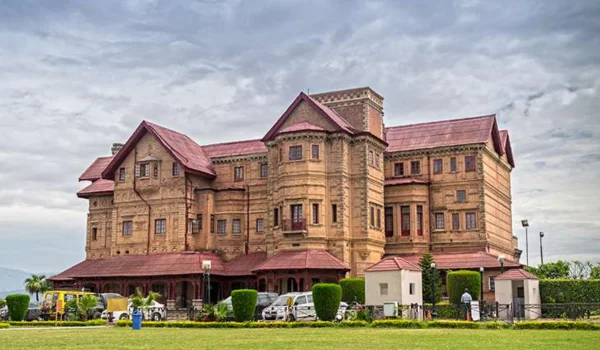
| Information | Details |
| Palace Name | Amar Mahal Palace |
| Location | Jammu, Jammu & Kashmir, India |
| Property Type | Historic Royal Palace / Museum |
| Built | 19th century; official Jammu district sources date the palace to 1862 |
| Associated With | Raja Amar Singh and the Dogra royal family |
| Architectural Style | French Chateau-inspired architecture |
| Main Material | Red sandstone |
| Location Setting | Hill overlooking the Tawi River |
| Present Use | Museum and heritage site |
| Famous For | 120-kg golden throne, Pahari paintings and royal collections |
| Museum Management | Hari-Tara Charitable Trust |
| Nearest Airport | Jammu Airport, about 10 km |
| Nearest Railway Station | Jammu Tawi, about 8 km |
| Bus Stand | About 3 km |
The exact historical dating varies among official tourism sources: the Jammu district administration states that the palace was built in 1862, while J&K Tourism material describes its construction in the 1890s. For that reason, the dating should be treated with this source-level distinction rather than presented as an undisputed single date.
Where Is Amar Mahal Palace Located?
Amar Mahal Palace is situated in Jammu, on a hill overlooking the Tawi River. Its elevated position gives the palace an attractive setting and helps explain its importance as both a royal residence and an architectural landmark. The Jammu district administration describes it as being on the National Highway towards Srinagar.
The palace is also conveniently positioned for visitors exploring other major attractions of Jammu, including Mubarak Mandi Palace, Dogra Art Museum, Raghunath Temple and Bahu Fort.
History of Amar Mahal Palace
Amar Mahal is closely connected with the Dogra royal heritage of Jammu.
The palace served as the residence of Raja Amar Singh, and its architecture reflects a combination of European and Indian influences. J&K Tourism describes it as being designed in the manner of a French chateau, while Indian craftsmen contributed to its construction and detailing.
Over time, the royal residence was transformed into a museum. This adaptive reuse preserved an important part of Jammu’s royal environment while making its collections accessible to visitors.
The museum is now looked after by the Hari-Tara Charitable Trust, according to the Jammu district administration and J&K Tourism.
Amar Mahal Palace Architecture
One of the first things visitors notice about Amar Mahal is that it does not follow the conventional appearance associated with many Indian palaces.
Instead, it has the appearance of a French chateau, combined with Indian craftsmanship and materials. The red sandstone exterior gives the building a distinctive appearance against the surrounding landscape.
Its hilltop position overlooking the Tawi adds another important architectural and visual dimension.
The palace demonstrates how Dogra-era architecture incorporated international influences while retaining connections with local building traditions.
Key Architectural Characteristics
- French chateau-inspired design
- Red sandstone construction
- Hilltop location
- Views towards the Tawi River
- European architectural influence
- Indian craftsmanship
- Historic royal interiors
The result is a palace that looks noticeably different from the Mughal, Rajput and Indo-Saracenic palace complexes found elsewhere in India.
Amar Mahal Museum
Today, Amar Mahal is best understood as a palace museum.
According to the Jammu district administration, four rooms of the palace have been converted into art galleries and historical museum spaces. These galleries help present the royal history of Jammu through paintings and other collections.
The museum gives visitors an opportunity to experience the palace not merely as an architectural structure but as a place connected with the history and cultural life of the Dogra rulers.
The Famous Golden Throne
Perhaps the most famous object associated with Amar Mahal Museum is the golden throne of Jammu.
The Jammu district administration and J&K Tourism both state that the throne weighs approximately 120 kilograms and is made of pure gold.
The throne is one of the museum’s principal attractions and demonstrates the wealth and ceremonial importance associated with the former royal household.
Its presence also makes Amar Mahal particularly interesting for visitors studying royal objects, craftsmanship and the material culture of princely India.
Pahari Paintings at Amar Mahal
Art is another major attraction at Amar Mahal.
The museum contains examples of Pahari paintings, including works depicting stories from the Mahabharata and other traditional folklore. The Jammu district administration specifically mentions paintings associated with the story of Nala and Damayanti.
The collection provides an opportunity to understand the artistic traditions that developed in the Himalayan and adjoining regions.
For visitors interested in Indian miniature painting, the Pahari collection adds considerable cultural value to the palace.
Contemporary Indian Art
Amar Mahal’s collection is not limited to traditional royal-era art.
The museum also displays works associated with modern Indian artists. Incredible India mentions works by artists including M. F. Husain and Laxman Pai, alongside the Pahari painting collection.
This combination of historical and modern art gives Amar Mahal a broader identity than a conventional palace museum.
Royal Portraits and the Durbar Hall
The palace’s royal character can also be experienced through portraits and historic displays.
J&K Tourism notes that the Durbar Hall contains family portraits of the rulers of Jammu and Kashmir along with Pahari paintings.
Such displays help visitors connect the physical palace with the people and political history of the Dogra royal family.
Amar Mahal Library
Another important part of Amar Mahal is its library.
Official Jammu sources state that the library contains approximately 25,000 books covering a wide range of subjects and disciplines.
The collection adds an educational dimension to the property. It demonstrates that royal residences were not only places of administration and ceremonial activity but could also become centres for collecting books, art and knowledge.
Amar Mahal as a Heritage Tourism Destination
Amar Mahal occupies an important position within Jammu’s heritage tourism circuit.
The palace can be combined with visits to several other cultural and historical attractions in the city. Government tourism information lists Amar Mahal alongside attractions such as Mubarak Mandi Palace, Dogra Art Museum, Raghunath Temple and Bahu Fort.
This makes Amar Mahal particularly useful for visitors who want to explore Jammu through its royal, artistic and architectural heritage rather than visiting individual attractions in isolation.
Amar Mahal and the Local Economy
Although Amar Mahal is primarily a museum and heritage property rather than a commercial hotel, it contributes to the wider tourism ecosystem.
A heritage attraction can indirectly support:
- Local hotels
- Restaurants and cafés
- Tour operators
- Heritage guides
- Local transportation
- Taxi services
- Handicraft sellers
- Souvenir businesses
- Photography services
- Cultural and educational activities
These should be understood as indirect economic relationships, rather than services necessarily operated by Amar Mahal itself.
Conservation and Heritage Management
Historic palaces require continuous attention to their architecture, interiors, collections and surrounding environment.
Amar Mahal’s conversion into a museum represents an important form of adaptive reuse. Instead of remaining solely a former royal residence, the property has been given a continuing cultural purpose.
For heritage properties such as Amar Mahal, conservation can involve protecting:
- Historic architecture
- Stonework
- Royal interiors
- Paintings
- Manuscripts and books
- Furniture
- Decorative objects
- Museum collections
The continued use of the building as a museum therefore helps maintain its public relevance.
Amar Mahal and Insurance Considerations
From a general heritage-property perspective, palaces containing valuable artwork, historic architecture and important collections can face several risks.
Depending on the ownership and management arrangements, relevant forms of risk protection may include:
- Property insurance
- Fire insurance
- Public liability coverage
- Protection for valuable collections
- Disaster-related protection
- Restoration-related risk management
These are general considerations for heritage institutions. No specific insurance policy of Amar Mahal Palace should be assumed without confirmation from its management.
Amar Mahal Palace Timings
The Government of India’s Incredible India portal currently lists the following visiting hours:
| Season | Timings |
| Summer | 9:00 AM – 5:00 PM |
| Winter | 10:00 AM – 5:00 PM |
| Monday | Closed |
Because visitor schedules can change, it is advisable to verify the latest timings before planning a visit.
Amar Mahal Palace Entry Fee
The Incredible India portal currently lists:
| Visitor Category | Entry Fee |
| Adults | ₹10 |
| Children | ₹5 |
| Foreign Nationals | ₹50 |
Fees can change, so visitors should confirm the latest ticket information before travelling.
How to Reach Amar Mahal Palace
Amar Mahal is relatively accessible from different parts of Jammu.
By Air
The Jammu district administration lists Jammu Airport at approximately 10 km from Amar Mahal.
By Train
Jammu Tawi Railway Station is approximately 8 km away.
By Road
The palace is around 3 km from the Jammu bus stand, making road transport a practical option for visitors already in the city.
Nearby Places to Visit
Visitors can combine Amar Mahal with other attractions in Jammu, including:
- Mubarak Mandi Palace
- Dogra Art Museum
- Raghunath Temple
- Bahu Fort
- Peer Kho Cave Temple
- Ranbireshwar Temple
- Manda Zoo
These attractions are part of the wider Jammu tourism circuit highlighted by official tourism sources.
Things to Know Before Visiting
Before visiting Amar Mahal, keep these points in mind:
- Check the latest opening hours before travelling.
- Confirm the current entry fee.
- The palace functions as a museum, so follow museum rules.
- Photography restrictions may apply to particular exhibits or areas.
- Allow enough time to explore the art collections and historic displays.
- Consider combining the visit with nearby Dogra heritage attractions.
- Visitors interested in the palace’s history should allow additional time for the museum exhibits rather than treating it as a quick photo stop.
FAQs
- Where is Amar Mahal Palace located?
Amar Mahal Palace is located in Jammu, on a hill overlooking the Tawi River.
- Who lived in Amar Mahal Palace?
The palace was once the residential palace of Raja Amar Singh and was associated with the Dogra royal family.
- What is Amar Mahal Palace famous for?
It is particularly famous for its French chateau-style architecture, royal history, art collections and its approximately 120-kg pure-gold throne.
- Is Amar Mahal Palace a museum?
Yes. The historic palace has been converted into a museum containing art galleries and collections relating to the royal history of Jammu.
- How far is Amar Mahal from Jammu Airport?
The Jammu district administration lists the palace at approximately 10 km from Jammu Airport.
- Is Amar Mahal Palace worth visiting?
For visitors interested in Dogra history, royal architecture, Indian art and museums, Amar Mahal is an important heritage attraction in Jammu. Its unusual French chateau-inspired architecture and exceptional collections make it different from many other Indian palace museums.
Final Thoughts
Amar Mahal Palace is one of Jammu’s most distinctive examples of royal heritage. Its hilltop setting overlooking the Tawi River, red sandstone construction and French chateau-inspired design give it a character that separates it from many traditional Indian palaces. More importantly, its transformation from a royal residence into a museum has allowed its architectural and cultural legacy to remain accessible to the public.
The golden throne, Pahari paintings, royal portraits, contemporary artworks and extensive library make Amar Mahal more than an architectural attraction. It is a place where Dogra history, art, literature and heritage tourism come together. For a palace-focused platform such as Corporate Palace, Amar Mahal offers a strong example of how a former royal residence can be preserved through museum use while continuing to contribute to Jammu’s wider cultural and tourism economy.