Amer Palace and Fort, commonly called Amer Fort or Amber Fort, is one of the most important royal monuments in Rajasthan. Located around 11 km from central Jaipur, the hilltop complex was the principal seat of the rulers of Amer before the capital shifted to Jaipur. The fort is especially known for its massive gateways, courtyards, Rajput-Mughal architecture, Sheesh Mahal, royal residences and strategic hill setting. Construction of the major palace complex was commissioned by Maharaja Man Singh I in 1592, with later rulers expanding and modifying it. Today, Amer Fort is part of the Hill Forts of Rajasthan UNESCO World Heritage Site and is among Jaipur’s major heritage-tourism attractions.
Quick Information
| Information | Details |
| Name | Amer Palace and Fort |
| Common Names | Amer Fort, Amber Fort, Amber Palace |
| Location | Amer, Jaipur, Rajasthan |
| Distance from Jaipur | About 11 km from central Jaipur |
| Historical Kingdom | Amer |
| Major Builder | Maharaja Man Singh I |
| Major Construction | From 1592, with later additions |
| Architectural Style | Rajput and Mughal influences |
| Main Material | Sandstone and white marble |
| Property Type | Historic fort-palace complex |
| Former Use | Royal residence and fortified capital |
| Present Use | Heritage monument and tourist attraction |
| UNESCO Status | Part of Hill Forts of Rajasthan |
| Main Attractions | Sheesh Mahal, Diwan-i-Aam, Jaleb Chowk, Ganesh Pol, Sukh Niwas |
| Main Visiting Hours | Approximately 8:00 AM–5:30 PM according to Rajasthan Tourism |
| Entry Fee | ₹100 Indian nationals; ₹500 foreign visitors, according to Rajasthan Tourism’s published visitor information |
| Sound & Light Show | Evening shows available; timings vary seasonally |
| Best Time | October to February is generally more comfortable |
Where Is Amer Palace and Fort Located?
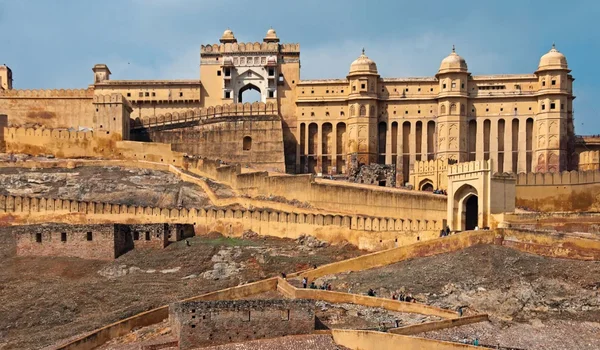
Amer Palace and Fort is located at Amer, near Jaipur, Rajasthan, on a hill overlooking the historic settlement and Maota Lake.
The fort is approximately 11 km from central Jaipur. Its hilltop location was important not only for creating a grand royal residence but also for defence. The surrounding Aravalli landscape provided natural protection and excellent views across the region.
Amer is also part of the larger heritage landscape around Jaipur, with Jaigarh Fort, Panna Meena ka Kund and Jal Mahal among the notable places that can be included in the same sightseeing plan.
History of Amer Palace and Fort
Amer was the earlier capital and royal seat of the Kachwaha rulers before the establishment of Jaipur.
The major palace complex visible today began taking shape under Maharaja Man Singh I, who commissioned important construction around 1592. Later rulers expanded the complex, adding new courtyards, halls, palaces and decorative elements.
The fort therefore should not be understood as a building completed by one ruler in one phase. It developed over generations as the political power and architectural ambitions of the Kachwaha rulers changed.
The palace combined two important functions:
- A fortified seat of political power
- A residential and ceremonial royal complex
This combination explains why Amer has such massive defensive walls while also containing highly decorated halls and private royal spaces.
Amer Before Jaipur
By the early 18th century, Amer had become increasingly constrained by its hilly terrain and growing population. Sawai Jai Singh II eventually established Jaipur in 1727 on the plains.
UNESCO notes that the new city was deliberately planned as a trade and commerce centre, while remaining connected to the older royal seat at Amer.
The movement of the capital did not erase Amer’s importance. The fort and palace remained a major symbol of the Kachwaha royal legacy.
Amer Palace Architecture
Amer Fort is an excellent example of the interaction between Rajput and Mughal architectural traditions.
The complex uses sandstone, marble, decorative plasterwork, carved elements, courtyards, gateways and gardens. Rajasthan Tourism describes the fort as a combination of pale yellow and pink sandstone with white marble.
The complex is divided into four principal sections, each organised around a courtyard.
Important architectural characteristics include:
- Massive fortification walls
- Monumental gateways
- Large courtyards
- Decorative arches
- Marble work
- Carved stone details
- Painted and mirrored interiors
- Gardens
- Royal residential areas
- Water-management features
UNESCO identifies Amber Palace as an important representation of the development of a Rajput-Mughal court style, particularly through later additions associated with Mirza Raja Jai Singh I.
The Four Courtyards of Amer Fort
The layout of Amer Palace becomes easier to understand through its four major courtyard areas.
Jaleb Chowk
Jaleb Chowk is one of the first major spaces visitors encounter after entering the fort.
Historically, it functioned as a parade ground where returning armies displayed their spoils. The courtyard therefore had both ceremonial and military importance.
Diwan-i-Aam
The Diwan-i-Aam, or Hall of Public Audience, was where the ruler interacted with members of the public.
Its columns and open arrangement demonstrate the importance of ceremonial public interaction within the royal complex.
Diwan-i-Khas and Sheesh Mahal Area
The more private royal areas contain some of Amer’s most elaborate decoration.
The Sheesh Mahal, or Palace of Mirrors, is particularly famous for its extensive mirror work. Small pieces of mirror incorporated into the surfaces reflect light and create a distinctive visual effect.
Man Singh Palace
The Man Singh Palace is associated with the older section of the complex and contains residential areas and courtyards.
The palace’s women’s quarters, gardens and private spaces demonstrate that Amer was not simply a military fort. It was a functioning royal settlement.
Sheesh Mahal: The Most Famous Interior
The Sheesh Mahal is perhaps the best-known interior space at Amer Fort.
Its mirror decoration is designed to catch and reflect light across the walls and ceilings. The effect is especially striking when light enters the room.
The mirror work is part of a larger tradition of highly decorated Rajput-Mughal palace interiors.
Visitors should remember that the Sheesh Mahal is a historic conservation area, so access and viewing arrangements can change depending on restoration and management requirements.
Sukh Niwas and Royal Cooling
Another fascinating feature is Sukh Niwas, also known as Sukh Mahal.
The palace incorporated an early form of passive cooling. Water was channelled through parts of the structure, helping create a cooler environment inside.
In a modern building, air-conditioning performs a similar broad function, but Amer’s system relied on architectural planning, water and airflow rather than mechanical cooling.
This demonstrates that palace architecture was not only about decoration. It also addressed practical issues such as climate, water and comfort.
Ganesh Pol
The Ganesh Pol is one of Amer’s most visually distinctive gateways.
It provides access toward the private palace areas and is decorated with elaborate architectural details.
The gateway demonstrates the way Rajput palace design combined security with visual grandeur. A fortified entrance could simultaneously serve as a statement of royal authority.
Temples Inside Amer Fort
Amer’s royal complex also contains religious spaces.
The Shila Devi Temple is particularly significant and is located near the Jaleb Chowk area. The temple has long been associated with the religious traditions of the Kachwaha rulers.
The presence of temples within the fortified palace complex illustrates the close relationship between royal authority, religion and everyday court life.
Maota Lake and the Palace Water System
Maota Lake lies below Amer Fort and forms an important part of its visual setting.
The water body also had a practical role.
UNESCO documentation describes an elaborate hydraulic arrangement that used water collected from Maota Lake and mechanisms including pulleys and a Persian wheel to raise water into the palace.
This is an important reminder that large historic palaces required sophisticated infrastructure to support their inhabitants.
Amer Fort and Jaigarh Fort
Amer Fort and Jaigarh Fort are closely connected geographically and historically.
Jaigarh occupies a higher position above Amer and functioned as an important defensive stronghold for the kingdom. Its massive walls and elevated location provided strategic protection for the Amer complex.
Rajasthan Tourism also notes underground tunnels connecting Amer and Jaigarh, with a restored section open to visitors.
This relationship makes the two forts particularly interesting when studied as parts of a wider defensive and royal landscape rather than as completely separate monuments.
Amer Fort as a UNESCO World Heritage Site
Amer Fort is included in the Hill Forts of Rajasthan, which UNESCO inscribed as a World Heritage property.
The serial UNESCO property includes six major forts representing the fortified seats of Rajput princely states. Within these forts, defensive structures coexist with palaces, temples, urban settlements and other elements of courtly life.
UNESCO specifically identifies Amber Palace as representative of an important phase in the development of Rajput-Mughal court architecture.
This status significantly increases Amer’s importance for international heritage tourism.
Amer Fort Timings
Current official tourism sources provide slightly different opening times.
Rajasthan Tourism currently lists 8:00 AM to 5:30 PM, while Incredible India currently lists 9:00 AM to 6:00 PM.
Because official sources are not fully consistent, visitors should verify the latest timings before travelling.
| Day | Published Visiting Information |
| Monday | Approximately 8:00 AM–5:30 PM |
| Tuesday | Approximately 8:00 AM–5:30 PM |
| Wednesday | Approximately 8:00 AM–5:30 PM |
| Thursday | Approximately 8:00 AM–5:30 PM |
| Friday | Approximately 8:00 AM–5:30 PM |
| Saturday | Approximately 8:00 AM–5:30 PM |
| Sunday | Approximately 8:00 AM–5:30 PM |
Important: Timings can change due to government orders, conservation work, special events or operational conditions.
Amer Fort Entry Fee
Rajasthan Tourism’s published visitor information gives the following rates:
| Visitor Category | Published Fee |
| Indian Nationals | ₹100 |
| Foreign Visitors | ₹500 |
| Sound & Light Show | ₹250 |
The same Rajasthan Tourism material lists the main visiting period as 8:00 AM–5:30 PM.
Ticket categories, concessions, camera charges and special experiences can change, so visitors should check the latest official ticket information before visiting.
Sound and Light Show at Amer Fort
The evening sound and light show presents the history and traditions of Amer through a combination of narration, lighting and the fort’s dramatic setting.
Rajasthan Tourism currently lists seasonal timings for the shows:
| Period | English | Hindi |
| October–February | 6:30 PM | 7:30 PM |
| March–April | 7:00 PM | 8:00 PM |
| May–September | 7:30 PM | 8:30 PM |
The department also notes a special schedule for October 1–10.
Because evening programmes can change, it is sensible to confirm the schedule before making a separate trip for the show.
Elephant Rides at Amer Fort
Elephant rides have historically been promoted as a tourist experience at Amer.
Rajasthan Tourism’s current Jaipur page says that around 80–100 elephants carry a limited number of visitors each day and notes a published price of ₹1,100 for two visitors for a one-way ride from the bottom of the hill to the palace courtyard.
However, animal-welfare rules, government regulations and operating conditions can change. Visitors should verify whether the experience is operating and under what current conditions rather than assuming availability.
How to Reach Amer Palace and Fort
By Road
Amer Fort is around 11 km from central Jaipur.
Taxis, cars, auto-rickshaws and local buses can be used to reach the fort. Rajasthan Tourism states that buses to Amber Palace operate from areas including Ajmeri Gate and MI Road, taking roughly 40 minutes.
By Train
Visitors arriving by train can reach Jaipur Junction and continue to Amer by road.
By Air
The nearest airport is Jaipur International Airport.
From the airport, visitors can continue by taxi or other local transport.
By Metro
Metro connectivity is useful for travelling around Jaipur, but Amer Fort itself is not directly beside a metro station. Visitors generally need to combine metro travel with road transport.
Nearby Places to Visit
Amer Fort is located within one of Jaipur’s richest heritage-tourism zones.
Useful nearby places include:
- Jaigarh Fort
- Panna Meena ka Kund
- Jal Mahal
- Nahargarh Fort
- Jaipur city
- Hawa Mahal
- City Palace
- Jantar Mantar
A visit to Amer is particularly rewarding when combined with Jaigarh because the two sites help explain the defensive and royal geography of the old Amer kingdom.
Best Time to Visit Amer Fort
The most comfortable period for exploring Amer is generally October to February, when Jaipur’s weather is cooler than during the peak summer months.
Winter mornings are especially suitable because:
- The weather is more comfortable for walking.
- Outdoor courtyards are easier to explore.
- The hill climb is less tiring.
- Photography conditions can be pleasant.
- The wider Jaipur sightseeing circuit is easier to cover.
Summer afternoons can be extremely hot, while the monsoon can bring humidity and occasional rain.
For the best experience, an early morning visit is usually preferable to arriving during the hottest part of the day.
Why Is Amer Palace and Fort Important for Businesses?
Amer Fort has a major indirect economic role in Jaipur.
Its status as a major heritage attraction supports businesses connected with:
- Hotels
- Restaurants
- Tour operators
- Tourist guides
- Local transport
- Handicrafts
- Souvenir shops
- Cultural performances
- Photography
- Travel agencies
- Event and wedding services
The relationship is broader than the monument itself. Visitors attracted by Amer spend money across Jaipur’s tourism ecosystem.
This makes Amer a strong example of how heritage assets can generate economic activity without being converted into conventional commercial properties.
Amer Fort and Heritage Tourism
Amer is an important part of Rajasthan’s heritage-tourism economy.
The fort offers visitors several experiences at once:
- Royal history
- Rajput architecture
- Mughal influence
- Military history
- Religious heritage
- Palace interiors
- Traditional engineering
- Hill landscapes
- Cultural performances
Its inclusion in the UNESCO Hill Forts of Rajasthan strengthens its international tourism profile.
The wider Amer-Jaipur circuit also demonstrates how historic monuments can anchor a destination’s tourism identity.
Finance, Investment and Insurance Perspective
Amer Fort should not be treated as a private property investment opportunity.
It is a protected heritage monument, and there is no appropriate basis for publishing speculative figures about its property value, ROI or commercial returns.
From a broader economic perspective, however, Amer demonstrates the financial importance of heritage tourism. A major monument can support an extensive chain of businesses through visitor spending.
Heritage properties also require significant attention to risk management. General insurance considerations for historic monuments can include:
- Fire protection
- Structural risks
- Public liability
- Natural disaster risks
- Security-related risks
- Conservation and restoration risks
These are general heritage-management considerations and should not be interpreted as details of any particular insurance policy held by Amer Fort.
Things to Know Before Visiting
Before visiting Amer Palace and Fort:
- Check the latest opening time and ticket price.
- Wear comfortable footwear because the complex involves considerable walking and slopes.
- Carry water, particularly during warmer months.
- Allow at least 2–3 hours if you want to explore the major palace areas properly.
- Do not touch murals, mirror work or other historic surfaces.
- Check photography restrictions in individual areas.
- Confirm sound-and-light-show timings separately if you plan to attend.
- If considering an elephant ride, verify current availability and regulations first.
FAQs
- Where is Amer Palace and Fort located?
Amer Palace and Fort is located at Amer, around 11 km from central Jaipur, Rajasthan.
- Who built Amer Fort?
The major palace complex was commissioned by Maharaja Man Singh I in 1592, with later rulers making substantial additions and changes.
- What is Amer Fort famous for?
Amer Fort is famous for its Rajput-Mughal architecture, Sheesh Mahal, royal courtyards, massive gateways, Maota Lake setting and historic connection with the rulers of Amer.
- What are Amer Fort’s timings?
Rajasthan Tourism currently lists the main visiting hours as approximately 8:00 AM to 5:30 PM, although another current government tourism source lists 9:00 AM to 6:00 PM. Visitors should verify the latest schedule before visiting.
- What is the entry fee for Amer Fort?
Rajasthan Tourism’s published visitor information lists ₹100 for Indian nationals and ₹500 for foreign visitors. The listed sound-and-light-show admission is ₹250.
- Is Amer Fort worth visiting?
Yes. Amer Fort is particularly worthwhile for visitors interested in Rajput history, palace architecture, military heritage, murals, royal interiors and Jaipur’s cultural landscape. Its UNESCO World Heritage status also makes it one of Rajasthan’s most significant historic attractions.
Final Thoughts
Amer Palace and Fort is one of India’s strongest examples of a fortified royal complex where military planning and palace architecture developed together. Its history stretches across generations of Kachwaha rulers, while its architecture demonstrates a notable interaction between Rajput and Mughal traditions. From Jaleb Chowk and Diwan-i-Aam to the Sheesh Mahal, Sukh Niwas and Man Singh Palace, different parts of Amer reveal different aspects of royal life.
Its importance today extends beyond history. As part of the UNESCO-listed Hill Forts of Rajasthan, Amer attracts domestic and international visitors and supports Jaipur’s wider tourism economy. Hotels, restaurants, guides, transport operators, handicraft sellers and cultural businesses all benefit indirectly from the visitor network surrounding the monument. For Corporate Palace, Amer is therefore an excellent example of how royal heritage, architecture, tourism, conservation and the local economy can remain closely connected centuries after a palace stops being a royal residence.