Mattancherry Palace, popularly known as the Dutch Palace, is one of the most important historic palaces in Kochi, Kerala. Located in Mattancherry, the palace was built by the Portuguese in the 16th century and later renovated by the Dutch, giving it its better-known name. The property is closely connected with the erstwhile Cochin royal family and today functions as a museum preserving royal portraits, weapons, ceremonial objects, maps, palanquins and other historic collections. Its Kerala-style architecture and extensive mural paintings, particularly the Ramayana scenes in the royal bedchamber, are among its biggest attractions.
Quick Information
| Information | Details |
| Palace Name | Mattancherry Palace |
| Also Known As | Dutch Palace |
| Location | Mattancherry, Kochi |
| District | Ernakulam |
| State | Kerala |
| Built | Around 1545 CE |
| Built By | Portuguese |
| Presented To | King Veera Kerala Varma of Kochi |
| Later Renovated By | Dutch |
| Property Type | Historic royal palace and museum |
| Architectural Style | Traditional Kerala/Nalukettu with colonial influences |
| Present Use | Museum and protected heritage monument |
| Famous For | Kerala murals, Ramayana paintings and Kochi royal collections |
| Entry Fee | ₹5 for adults; children below 15 free, according to Museum of India |
| Visiting Hours | Generally 10 AM–5 PM; weekly closure information should be verified before visiting |
| Nearest Railway Station | Ernakulam railway area |
| Nearest Airport | Cochin International Airport |
The official Kerala Tourism website currently lists visiting hours as 10 AM to 5 PM, while its Malayalam page mentions Monday as the weekly holiday and other current travel listings commonly identify Friday as the closure day. Because official and secondary listings are inconsistent, visitors should verify the latest opening day before travelling.
Where Is Mattancherry Palace Located?
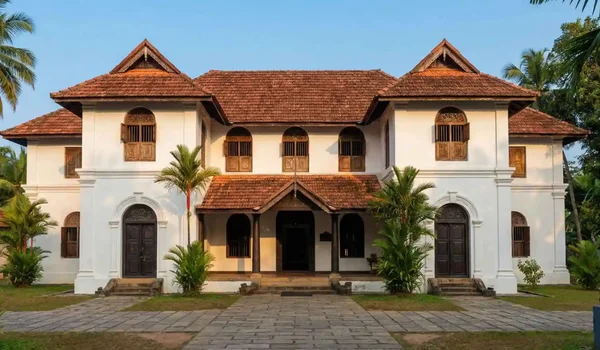
Mattancherry Palace is located in Mattancherry, Kochi, Kerala, within the historic Kochi area.
Mattancherry is a particularly important part of Kochi’s cultural landscape. The locality developed as a major centre of trade and became home to different communities, including Jews, Konkanis, Gujaratis, Jains and Marathis. Historic buildings, religious sites, markets and colonial-era structures continue to shape the area.
The palace is also close to Jew Town, the Paradesi Synagogue area and other Fort Kochi heritage attractions, making it easy to include in a wider heritage itinerary.
History of Mattancherry Palace
Mattancherry Palace has a fascinating history because its construction involves the Portuguese, its later development is associated with the Dutch, and its actual royal use is connected with the rulers of Kochi.
The palace was built around 1545 CE by the Portuguese and presented to King Veera Kerala Varma of the Kochi dynasty. Kerala Tourism describes the palace as a gift to the Kochi ruler.
The Portuguese had established a strong presence in the region, and the palace was built during a period of intense political, commercial and cultural interaction along the Malabar Coast.
Why Is It Called the Dutch Palace?
The name “Dutch Palace” can be confusing because the Portuguese originally constructed the building.
The explanation is that the Dutch later renovated and made significant additions to the palace after gaining control of Kochi. Because of these later interventions, the building became popularly known as the Dutch Palace.
Therefore, both names remain important:
- Mattancherry Palace reflects its location and historical identity.
- Dutch Palace reflects the later Dutch connection with the building.
Mattancherry Palace and the Kochi Royal Family
The palace was used by the rulers of the former Kingdom of Kochi.
It was associated with royal functions and ceremonies, including coronation-related activities. The palace also preserves objects that provide an insight into the lifestyle and ceremonial traditions of the Kochi rulers.
The collection includes:
- Portraits of Kochi rulers
- Royal clothing
- Crowns and caps
- Ceremonial weapons
- Swords and daggers
- Spears
- Royal umbrellas
- Palanquins
- Coins
- Dutch maps
- Other royal objects
These exhibits make the palace valuable not only as an architectural monument but also as a record of Kochi’s royal history.
Mattancherry Palace Architecture
The architecture of Mattancherry Palace is one of its strongest features.
The building follows the traditional Kerala nalukettu concept, in which different wings are arranged around a central courtyard. At the same time, European and colonial influences can be seen in parts of the structure.
The palace has:
- A quadrangular plan
- Central courtyard
- Four wings
- Sloping roofs
- Large halls
- Wooden ceilings
- Traditional Kerala design elements
- Colonial influences
One interesting feature is the palace flooring. Kerala Tourism describes the floor as being made using a traditional mixture involving lime, plant juices, burnt coconut shells and egg whites, producing a polished surface that can resemble dark stone.
Mattancherry Palace Murals
The murals are arguably the palace’s greatest artistic attraction.
The walls contain paintings depicting episodes from:
- Ramayana
- Mahabharata
- Krishna Leela
- Shiva Leela
- Kumarasambhavam
- Hindu mythology and religious traditions
The royal bedchamber is particularly famous for its Ramayana murals. Kerala Tourism notes that the murals in this area cover approximately 100 square metres and are generally dated to the 17th and 18th centuries.
Other paintings appear in the royal ladies’ room, staircase areas and coronation hall.
These murals are important examples of Kerala’s traditional mural painting heritage and are a major reason why the palace attracts art and history enthusiasts.
What Can You See Inside Mattancherry Palace?
The palace operates as a museum and contains a collection connected with the Kochi royal family.
Royal Bedchamber
The royal bedchamber, or Palliyara, is famous for its mural paintings depicting scenes from the Ramayana.
Coronation Hall
The coronation hall contains royal portraits and ceremonial displays associated with the Kochi rulers.
Royal Portraits
Life-sized portraits of Kochi rulers from the later royal period are displayed inside the palace.
Royal Objects
Visitors can see objects such as:
- Swords
- Daggers
- Spears
- Royal umbrellas
- Palanquins
- Coins
- Crowns and caps
- Ceremonial clothing
Dutch Maps
Historic maps associated with Kochi and Dutch activities are also part of the palace collection.
Temples and the Central Courtyard
The central courtyard has an important religious connection.
It houses the shrine of Pazhayannur Bhagavathi, regarded as the presiding deity of the Kochi royal family. There are also smaller shrines associated with Lord Shiva and Lord Krishna within the palace complex.
This is another feature that distinguishes Mattancherry Palace from many European-influenced colonial buildings. Its design and use remained closely connected with Kerala’s religious and royal traditions.
Mattancherry Palace as a Museum
Today, Mattancherry Palace functions primarily as a museum and heritage attraction rather than a functioning royal residence.
The Museum of India lists the Archaeological Survey of India (ASI) as the managing organisation and records facilities such as guided tours, parking, restrooms and drinking water. It also states that photography and videography are not permitted.
Visitors should therefore follow the latest instructions displayed at the museum rather than assuming that photography is allowed.
Mattancherry Palace Timings
Current online information is not completely consistent regarding the weekly closing day.
Kerala Tourism’s Malayalam page lists:
10:00 AM to 5:00 PM, with Monday as the holiday.
However, the English Kerala Tourism page and several current travel listings indicate a Friday closure.
For this reason, the safest approach is to verify the latest opening schedule before visiting.
| Day | Current Published Information |
| Monday | Verify before visiting |
| Tuesday | Generally 10 AM–5 PM |
| Wednesday | Generally 10 AM–5 PM |
| Thursday | Generally 10 AM–5 PM |
| Friday | Verify before visiting |
| Saturday | Generally 10 AM–5 PM |
| Sunday | Generally 10 AM–5 PM |
Important: Because official listings currently conflict on the weekly holiday, do not rely solely on an old schedule when planning a visit.
Mattancherry Palace Entry Fee
The Museum of India currently lists the following entry fee:
| Visitor Category | Entry Fee |
| Adults | ₹5 |
| Children below 15 years | Free |
The same source identifies the museum as being managed by ASI.
Some older or third-party sources show different fee structures, so visitors should confirm the latest ticket price at the time of travel.
How to Reach Mattancherry Palace
By Road
Mattancherry is well connected to other parts of Kochi by road. Buses, taxis and local transport services can be used to reach the palace.
The Mattancherry bus/jetty area is close to the palace, making the attraction convenient to combine with a local walking tour.
By Train
The nearest major railway connections are in the Ernakulam area. Kerala Tourism places Ernakulam railway facilities roughly 10 km from the palace.
By Air
The nearest major airport is Cochin International Airport. Kerala Tourism lists the airport at roughly 42 km from the palace.
By Ferry
Kochi’s water transport network can also be useful when exploring the Fort Kochi and Mattancherry areas. The palace’s location makes it possible to combine a visit with other attractions around the historic waterfront.
Nearby Places to Visit
One of the biggest advantages of Mattancherry Palace is its location within a heritage-rich part of Kochi.
Nearby attractions include:
- Paradesi Synagogue
- Jew Town
- Mattancherry markets
- Fort Kochi
- Chinese fishing nets
- St. Francis Church
- Historic colonial buildings
- Kochi waterfront areas
The area is particularly suitable for a walking-based heritage experience because several attractions can be combined in one trip.
Why Is Mattancherry Palace Important for Tourism?
Mattancherry Palace plays an important role in heritage and cultural tourism in Kochi.
Its importance comes from the combination of:
- Kochi royal history
- Portuguese history
- Dutch influence
- Kerala architecture
- Traditional murals
- Museum collections
- Religious traditions
- Old trading neighbourhoods
The palace also helps visitors understand Kochi as a historic trading centre where different cultures interacted over several centuries.
Kerala’s official village information describes Mattancherry as a former centre of spice trade and highlights its multicultural character.
Why Is Mattancherry Palace Important for Businesses?
Mattancherry Palace itself is primarily a heritage and museum property, so it should not be treated as a commercial hotel or event venue.
Its economic importance is more indirect.
Tourism around the palace supports an ecosystem involving:
- Hotels
- Homestays
- Restaurants
- Cafés
- Tour operators
- Heritage guides
- Local transport
- Souvenir shops
- Antique businesses
- Handicraft sellers
- Spice traders
- Photography services
The palace therefore contributes to the wider tourism economy of Mattancherry and Fort Kochi.
Heritage Conservation and Economic Value
Mattancherry Palace demonstrates how heritage conservation and tourism can work together.
A historic building can generate economic value without being converted into a commercial hotel. In this case, its museum function attracts visitors who then spend money in the surrounding neighbourhood.
This creates a wider economic chain involving accommodation, food, transportation, shopping and cultural experiences.
For heritage destinations, maintaining the original building, murals and collections is therefore not only a cultural responsibility but also important for long-term tourism value.
Finance, Investment and Insurance Perspective
Mattancherry Palace should not be presented as a property investment opportunity.
There is no reliable basis for publishing a current market value, ROI, rental return or private investment opportunity associated with the palace.
From a broader heritage-management perspective, however, historic properties require long-term funding for:
- Structural maintenance
- Mural conservation
- Fire protection
- Security
- Museum operations
- Restoration
- Visitor facilities
Insurance considerations for heritage properties can also include property protection, fire risks, public liability and conservation-related risks. These are general industry considerations and do not confirm any specific insurance policy for Mattancherry Palace.
Best Time to Visit Mattancherry Palace
Kochi can be visited throughout the year, but the more comfortable period for exploring historic neighbourhoods is generally during the cooler and relatively drier months.
For a heritage walk around Mattancherry, the period from roughly October to February can be more comfortable than the hottest or rainiest periods.
However, visitors should also consider Kerala’s monsoon conditions and their tolerance for heat and humidity.
A morning visit is particularly useful if you want to combine the palace with Jew Town and other nearby attractions.
Things to Know Before Visiting
Before visiting Mattancherry Palace, keep these points in mind:
- Verify the latest weekly holiday because current published sources give conflicting information.
- Carry a valid ID if required by the current ticketing system.
- Photography and videography may be restricted inside the museum.
- Do not touch the murals, walls or displayed artefacts.
- Allow around one hour for the palace, and more if you want to study the murals and exhibits carefully.
- Combine the visit with Jew Town and nearby heritage attractions.
- Wear comfortable footwear if planning to explore Mattancherry on foot.
- Check the latest entry fee before travelling because museum charges can change.
FAQs
- Where is Mattancherry Palace located?
Mattancherry Palace is located in Mattancherry, Kochi, Kerala, in the historic Kochi area.
- Why is Mattancherry Palace called the Dutch Palace?
It was originally built by the Portuguese, but the Dutch later renovated and modified the palace. This Dutch connection led to its popular name, Dutch Palace.
- Who built Mattancherry Palace?
The Portuguese built the palace around 1545 CE and presented it to King Veera Kerala Varma of Kochi.
- What is Mattancherry Palace famous for?
It is famous for its Kerala-style architecture, Kochi royal collections and detailed mural paintings depicting scenes from the Ramayana, Mahabharata and other Hindu traditions.
- What is the entry fee for Mattancherry Palace?
The Museum of India currently lists ₹5 for adults, with free entry for children below 15 years. Visitors should verify the latest fee before visiting.
- How long does it take to visit Mattancherry Palace?
The palace can be covered relatively quickly, but visitors interested in the murals, royal objects and architecture should allow around one hour or more.
Final Thoughts
Mattancherry Palace is much more than an old royal building in Kochi. Its story brings together the Cochin royal family, Portuguese influence, Dutch renovations, traditional Kerala architecture and some of the country’s notable historic mural paintings. Today, the palace functions as a museum where visitors can see royal portraits, ceremonial objects, weapons, maps and other collections connected with Kochi’s past.
Its location also gives it wider importance. Situated in the culturally diverse Mattancherry neighbourhood, the palace forms part of a larger heritage-tourism ecosystem involving Jew Town, historic markets, restaurants, guides and local businesses. For Corporate Palace, Mattancherry Palace is a strong example of how a historic royal property can preserve its cultural identity while continuing to create value through heritage tourism, education, conservation and the local economy.