Thiba Palace, also known as Thibaw Palace, is one of the most historically important heritage buildings in Ratnagiri, Maharashtra. Built by the British Government in 1910, the palace became the residence of King Thibaw Min, the last king of Burma, who was exiled to Ratnagiri with his family. He and Queen Supayalat lived here until his death in 1916. Today, the palace functions as a museum and preserves objects and memories associated with the king’s years in exile. Located on a hill in Ratnagiri, the palace is also known for its distinctive architecture, scenic surroundings and views towards Someshwar Creek, Bhatye Bridge and the Arabian Sea.
Quick Information
| Particular | Details |
| Name | Thiba Palace / Thibaw Palace |
| Location | Abhyudhya Nagar, Ratnagiri, Maharashtra |
| Built | 1910 |
| Built By | British Government |
| Associated With | King Thibaw Min of Burma |
| Historical Use | Residence of the exiled Burmese royal family |
| Current Use | Museum and heritage attraction |
| Architecture | Three-storeyed structure with sloping roofs |
| Main Attractions | Palace architecture, museum, wooden windows and scenic views |
| Nearest Railway Station | Ratnagiri Railway Station |
| Nearest Bus Stand | Ratnagiri Bus Stand |
| Visiting Time | Generally around 10 AM to 5 PM; verify locally |
| Entry Fee | Applicable; current fee should be confirmed before visiting |
Where Is Thiba Palace?
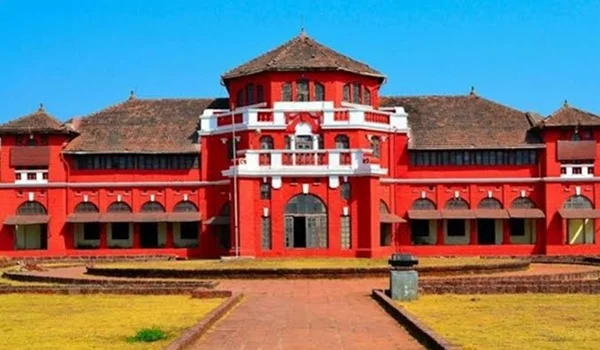
Thiba Palace is situated in Abhyudhya Nagar in Ratnagiri town, Maharashtra.
The palace stands on a small hill and is relatively close to the main urban area. It is around 1–2 km from Ratnagiri Bus Stand according to tourism listings, while Ratnagiri Railway Station is approximately 7 km away.
Its elevated location is one of the reasons the palace is also valued as a viewpoint. Visitors can see parts of the surrounding landscape, including Someshwar Creek, Bhatye Bridge and the Arabian Sea.
History of Thiba Palace
The history of Thiba Palace is closely connected with the final years of King Thibaw Min, the last king of Burma, now Myanmar.
After the British conquest of Burma, King Thibaw and his family were exiled to India. Ratnagiri became their place of residence under British supervision.
The British Government constructed Thiba Palace in 1910 as a residence for the exiled royal family.
King Thibaw and Queen Supayalat lived at the palace until the king’s death in 1916. His years in Ratnagiri represent an important chapter in the colonial history of both India and Myanmar.
The palace therefore has a historical character that is different from traditional Indian royal palaces. It was built by the British specifically to house a foreign monarch who had been exiled from his kingdom.
King Thibaw and His Years in Ratnagiri
King Thibaw Min became the last monarch of the Konbaung dynasty of Burma.
His exile to Ratnagiri brought Burmese royal history into the Konkan region of Maharashtra.
The palace provides an opportunity to understand this unusual connection between Burma, British colonial rule and India.
Objects associated with King Thibaw’s life have been preserved in the museum, although the collection is relatively small compared with major national museums.
A Buddha image associated with King Thibaw is also preserved at the palace.
Architecture of Thiba Palace
Thiba Palace has a distinctive three-storeyed design with sloping roofs.
Some of its most notable architectural features include:
- Semi-circular wooden windows
- Decorative wooden carvings
- Sloping roofs
- Large open spaces
- Heritage staircases
- A marble-floored dancing hall
- Traditional colonial-era structural elements
The wooden windows are among the most visually distinctive parts of the building.
The palace’s design reflects the period in which it was constructed and combines a colonial institutional character with features suitable for a royal residence.
Museum Inside Thiba Palace
Thiba Palace now houses a museum.
The museum preserves objects and historical material connected with King Thibaw and his family.
Visitors may find:
- Royal belongings
- Historical photographs
- Objects associated with the Burmese royal family
- Sculptural and religious objects
- Information related to the king’s exile
- A Buddha image associated with King Thibaw
The museum gives the building additional historical value because visitors can learn about the people who lived there rather than seeing only the palace architecture.
Marble Dancing Hall
One of the notable interior spaces is the dancing hall, which has a marble floor.
The hall reflects the palace’s original residential character and provides an idea of how the building was designed for a royal household.
The interior is less elaborate than some of the grand palaces of Rajasthan, but its historical association with the last Burmese king makes it particularly significant.
Views from Thiba Palace
The palace’s hilltop location provides attractive views of the surrounding landscape.
From the area around the palace, visitors can see:
- Someshwar Creek
- Bhatye Bridge
- Arabian Sea
- Ratnagiri’s surrounding landscape
Sunset is particularly popular because of the western coastal setting.
The nearby Thiba Point is also associated with panoramic views and sunset sightseeing.
Timings of Thiba Palace
Government tourism information currently lists Thiba Palace as open approximately from 10:00 AM to 5:00 PM.
However, other travel sources publish different schedules, including a midday break and variations in weekly closing arrangements.
Because heritage sites can temporarily change their visiting hours for maintenance, administrative work or other reasons, it is advisable to confirm the current schedule locally before travelling.
Visitors should also allow enough time to explore both the building and museum.
Entry Fee
An entry fee is applicable for Thiba Palace.
Published sources currently show different amounts, with some recent visitor information mentioning nominal charges such as around ₹20 for adults. Since ticket prices can change, the latest fee should be confirmed at the palace before visiting.
If you are travelling with children, students or a larger group, check whether separate categories or concessions are available.
Best Time to Visit Thiba Palace
The cooler months from October to February are generally comfortable for exploring Ratnagiri’s heritage attractions.
The winter period is particularly suitable for combining Thiba Palace with beaches, forts and other outdoor destinations.
The monsoon season gives Ratnagiri a lush green landscape, but heavy rainfall can make road travel and outdoor sightseeing less convenient.
For sunset views, late afternoon can be attractive, but visitors should ensure that they arrive sufficiently early to enter before the site’s closing time.
Things to See at Thiba Palace
Historic Exterior
The three-storeyed structure and sloping roofs create a distinctive appearance that makes the palace easy to recognise.
Wooden Windows
The semi-circular wooden windows with decorative carvings are among the palace’s notable architectural details.
Museum
The museum provides historical information and displays objects connected with King Thibaw and his period of exile.
Dancing Hall
The marble-floored hall is one of the important interior spaces of the palace.
Buddha Image
A Buddha image associated with King Thibaw is preserved at the palace.
Hilltop Views
The elevated location provides views towards the creek, bridge and Arabian Sea.
Nearby Places to Visit
Ratnadurg Fort
Ratnadurg Fort is one of Ratnagiri’s major historic attractions. The fort occupies a coastal location and offers views over the Arabian Sea.
Bhatye Beach
Bhatye Beach is a popular coastal destination near Ratnagiri and is suitable for relaxing and enjoying the Konkan coastline.
Mandavi Beach
Mandavi Beach is located closer to Ratnagiri town and is another option for visitors interested in the sea and sunset.
Lokmanya Tilak Birthplace
Ratnagiri is the birthplace of Lokmanya Bal Gangadhar Tilak. His ancestral home is preserved as an important historical attraction.
Ratnagiri Marine Museum
Visitors interested in the coastal environment and marine life can explore other educational attractions in the Ratnagiri region.
Ganpatipule
Ganpatipule is a popular pilgrimage and beach destination located within driving distance of Ratnagiri. It can be included in a longer Konkan itinerary.
How to Reach Thiba Palace
By Road
Thiba Palace is located within Ratnagiri town and can be reached by taxi, auto-rickshaw or private vehicle.
The palace is around 1–2 km from Ratnagiri Bus Stand.
By Train
Ratnagiri Railway Station is the nearest major railway station and is approximately 7 km from the palace.
Visitors can hire a taxi or auto-rickshaw from the station.
By Air
Ratnagiri Airport is the nearest airport serving the region, although flight connectivity can be limited. Travellers may also consider larger airports depending on their origin and travel plans.
The rest of the journey can be completed by road.
Business and Tourism Importance
Thiba Palace contributes to Ratnagiri’s heritage tourism economy.
Although the palace itself is primarily a museum and heritage attraction, visitors generate demand for several supporting businesses, including:
- Hotels
- Restaurants
- Local taxis
- Auto-rickshaws
- Tour operators
- Tourist guides
- Handicraft shops
- Local food businesses
- Travel services
Its historical connection with Myanmar also gives Ratnagiri a distinctive international heritage story.
The palace can therefore be included in tourism itineraries covering Ratnagiri’s forts, beaches, temples and other historical attractions.
Finance and Investment Perspective
Thiba Palace is primarily a heritage and tourism asset rather than a conventional commercial investment property.
Its wider economic value comes from the tourism activity generated around it.
Businesses in the surrounding area can benefit from visitor demand through accommodation, food, transport, retail and tourism services.
Anyone considering a commercial investment near Ratnagiri should separately evaluate land values, tourist demand, seasonality, road connectivity, regulations and operating costs.
The existence of a heritage attraction should not by itself be considered a guarantee of property appreciation or business returns.
Insurance Considerations
Historic buildings and tourism attractions face risks that can differ from those of ordinary commercial properties.
Relevant insurance categories can include:
- Property insurance
- Fire insurance
- Public liability insurance
- Business interruption cover
- Equipment insurance
- Employee-related insurance
- Vehicle insurance
Heritage structures may also require specialised assessment because of their age, construction materials and conservation requirements.
The actual insurance arrangements depend on the ownership, management structure and applicable government rules.
Things to Know Before Visiting
- Thiba Palace is a historic heritage building, not a modern luxury palace hotel.
- It was built by the British Government in 1910.
- The palace is associated with King Thibaw Min, the last king of Burma.
- A museum operates inside the palace.
- Visiting hours and entry fees can change, so confirm them before travelling.
- The palace is located on elevated ground, so comfortable footwear is useful.
- The surrounding area offers scenic views towards the Arabian Sea.
- Combine the visit with Ratnadurg Fort, Bhatye Beach and other Ratnagiri attractions.
- Allow around one to two hours for a relaxed visit and nearby sightseeing.
FAQs
What is Thiba Palace famous for?
Thiba Palace is famous for being the residence of King Thibaw Min, the last king of Burma, during his exile in Ratnagiri. It is also known for its heritage architecture and museum.
Who built Thiba Palace?
The British Government built Thiba Palace in 1910 as a residence for the exiled King Thibaw Min and his family.
Where is Thiba Palace located?
Thiba Palace is located in Abhyudhya Nagar, Ratnagiri, Maharashtra, on a small hill within Ratnagiri town.
Is Thiba Palace a museum?
Yes. The palace currently houses a museum containing historical objects and material associated with King Thibaw and his family.
What are the timings of Thiba Palace?
Government tourism information currently lists the palace around 10 AM to 5 PM, but timings can vary. Visitors should confirm the current schedule before travelling.
How far is Thiba Palace from Ratnagiri Railway Station?
Ratnagiri Railway Station is approximately 7 km from Thiba Palace.
Final Thoughts
Thiba Palace is one of Ratnagiri’s most distinctive heritage attractions because its history connects Maharashtra with the final chapter of Burma’s monarchy. Built by the British in 1910, the palace became the residence of King Thibaw Min and his family during their years of exile. Today, the building serves as a museum and preserves historical objects associated with the royal family. Its three-storeyed architecture, carved wooden windows, marble dancing hall and hilltop views add to its visitor appeal. For travellers exploring Ratnagiri, Thiba Palace offers more than a conventional sightseeing stop: it provides an opportunity to understand an unusual intersection of Burmese royal history, British colonial rule and the cultural landscape of the Konkan region.