Thanjavur Maratha Palace, also known locally as Aranmanai, is one of the most important historic palace complexes in Tamil Nadu. Located in the heart of Thanjavur, the palace represents the architectural and cultural legacy of both the Nayak and Maratha dynasties. The complex was originally developed under the Thanjavur Nayaks and was later expanded and used as the royal residence of the Thanjavur Maratha rulers. Today, parts of the palace complex are associated with museums, the Saraswathi Mahal Library and other heritage attractions, while the Bhonsle royal family continues to have a connection with the palace premises. Its corridors, courtyards, towers, frescoes, sculptures and historic collections make it an important destination for understanding Thanjavur’s royal past.
Quick Information
| Information | Details |
| Name | Thanjavur Maratha Palace |
| Local Name | Aranmanai |
| Location | Thanjavur, Tamil Nadu |
| Historic Associations | Nayak and Maratha dynasties |
| Maratha Rule | 1674–1855 |
| Property Type | Historic royal palace complex |
| Main Complex | Sadar Mahal, Durbar Hall and associated structures |
| Museums | Royal Palace Museum, Maratha Museum and Art Gallery |
| Library | Saraswathi Mahal Library |
| Timings | Generally around 9:00 AM–6:00 PM for the palace attraction; individual museums may differ |
| Nearest Railway Station | Thanjavur Railway Station |
Where Is Thanjavur Maratha Palace Located?
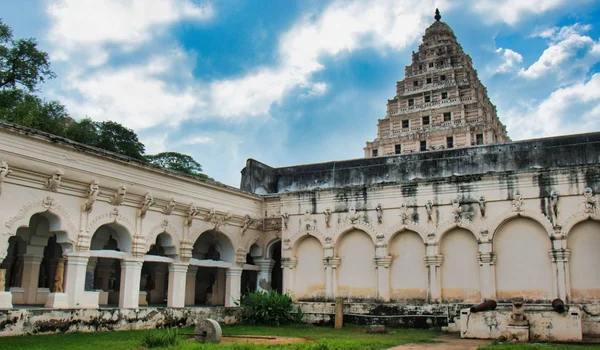
Thanjavur Maratha Palace is located in the historic centre of Thanjavur in Tamil Nadu.
The palace complex is situated close to the famous Brihadeeswarar Temple, making it easy for visitors to combine the two major heritage attractions during the same trip.
The surrounding area reflects Thanjavur’s long history as an important centre of administration, religion, art, music and scholarship.
The palace is part of the wider historic fort area and contains several buildings and cultural institutions rather than functioning as a single isolated palace building.
History of Thanjavur Maratha Palace
The origins of the palace can be traced to the Thanjavur Nayak period. The Nayak rulers developed the palace and fort complex before the Marathas established their rule in Thanjavur.
The Marathas came to Thanjavur during the later seventeenth century. Ekoji, also known as Venkoji, became the first Maratha ruler of Thanjavur, and the palace subsequently became the official residence of the Thanjavur Maratha rulers.
The Maratha dynasty ruled the region for several generations. One of the best-known rulers was Serfoji II, who was particularly associated with education, literature, libraries, medicine, arts and scholarship.
The Maratha political position changed substantially during the nineteenth century. Following British intervention and annexation, the royal family’s political authority declined, although the Bhonsle family retained its association with the palace.
The palace therefore represents more than one period of South Indian history. Its architecture and collections reflect the contributions of both the Nayaks and the Marathas.
The Bhonsle Royal Family
The Thanjavur Maratha Palace has a continuing association with the Bhonsle family, descendants of the Thanjavur Maratha rulers.
The palace is not simply a museum complex. Parts of the larger premises have continued to have a connection with the royal family.
This gives the property a different character from monuments that were completely converted into public museums after the end of royal rule.
For visitors, this distinction is important because some areas may have different levels of public access.
Architecture of the Palace
Thanjavur Maratha Palace is a large complex rather than a single architectural block.
Its buildings combine elements associated with Nayak and Maratha construction traditions. Large courtyards, corridors, halls, decorative surfaces and imposing towers contribute to its architectural character.
The palace complex includes:
- Sadar Mahal Palace
- Durbar Hall
- Queen’s courtyard
- Observation and tower structures
- Palace museum areas
- Art gallery
- Saraswathi Mahal Library
- Other historic buildings and courtyards
The architecture also contains stucco decoration, fresco paintings, carved details and large interior spaces.
One of the most interesting aspects of the palace is the way structures from different periods exist together within the same complex.
Durbar Hall
The Durbar Hall is among the most important architectural spaces within the palace complex.
It served as a royal court and ceremonial space and contains decorative artwork associated with the palace’s historic character.
Paintings depicting scenes from Hindu mythology can be found in the decorative scheme of the complex.
The scale of the hall and its ornamentation help visitors understand how royal ceremonies and official gatherings were conducted in the past.
Sadar Mahal Palace
Sadar Mahal forms an important section of the palace complex.
The area has been associated with museums and collections that help explain Thanjavur’s history.
The Royal Palace Museum and Raja Serfoji Memorial Hall are among the important heritage attractions connected with this section.
Visitors can see historic objects, sculptures, paintings and other materials associated with the region’s royal and artistic traditions.
Maratha Museum
The Maratha Museum provides a more focused look at the history of Maratha rule in Tamil Nadu.
Its collections include historical photographs, charts, sculptures, inscriptions and coins.
The museum is particularly useful for visitors who want to understand the history of the Thanjavur Maratha dynasty rather than only viewing the palace architecture.
Older government museum information lists the Maratha Museum as having been established in 1979.
Museum timings and ticket arrangements can differ from the wider palace complex and should be confirmed locally before visiting.
Art Gallery
The palace complex also contains an important art gallery with collections of stone sculptures and bronze icons.
Many of the sculptures are connected with South Indian religious and artistic traditions.
The gallery is particularly significant because Thanjavur is closely associated with the artistic legacy of the Chola region.
The collection allows visitors to see sculptures and objects from different historical periods in one location.
Saraswathi Mahal Library
The Saraswathi Mahal Library is one of the most important cultural institutions within the palace complex.
Its development was supported by successive Nayak and Maratha rulers, with Serfoji II playing a particularly important role in expanding its collections.
The library preserves rare manuscripts, books, maps, paintings and other scholarly materials in languages including Tamil and Sanskrit.
Its palm-leaf manuscripts and historical texts make it particularly valuable to researchers and students of Indian history, literature, medicine and culture.
The library was opened as a public library in the early twentieth century.
Palace Towers and Observation Structures
The palace complex contains several prominent tower-like structures.
One of the best-known is the Goodagopuram, a tall structure associated with the southern side of the palace complex.
The palace area also contains historic tower structures that provide evidence of the defensive and ceremonial importance of the larger fort complex.
The architecture of these towers makes them visually distinctive and helps explain how royal residences were connected with fortified urban settlements.
Palace Art and Frescoes
Decorative art is one of the major attractions of Thanjavur Maratha Palace.
Frescoes and paintings can be seen in parts of the complex, including areas associated with the Durbar Hall.
The artwork provides insight into the religious themes, artistic techniques and visual culture of the period.
Visitors interested in South Indian painting traditions can therefore find the palace particularly rewarding.
Timings of Thanjavur Maratha Palace
Current tourism information generally lists the palace attraction as open during daytime hours, with commonly published timings around 9:00 AM to 6:00 PM.
Individual museums and institutions inside the palace complex can have different schedules. Some older government records list separate timings for specific museum sections.
| Visitor Area | General Timing Information |
| Palace complex | Around 9:00 AM–6:00 PM |
| Individual museums | May have separate timings |
| Saraswathi Mahal Library | Separate institutional schedule |
| Best visiting period | Morning or late afternoon |
Because timings can change, visitors should confirm the latest local schedule before travelling.
Entry Fee
Entry charges can vary between different parts of the palace complex.
The palace, museums, art gallery and library may not necessarily operate under one common ticketing arrangement.
Older government records have published very low historic entry charges for specific palace sections, but these should not be treated as current prices.
Visitors should therefore confirm the latest ticket information at the relevant entrance before planning their budget.
How to Reach Thanjavur Maratha Palace
Thanjavur has good road and railway connectivity, making the palace relatively accessible.
By Train
Thanjavur Railway Station is the nearest major railway station and is connected with several cities in Tamil Nadu and other parts of South India.
The palace is only a short local journey from the railway station.
By Road
Thanjavur is connected by road with major cities such as Tiruchirappalli, Chennai, Madurai and other parts of Tamil Nadu.
Local taxis, auto-rickshaws and other city transportation can be used to reach the palace.
By Air
Tiruchirappalli International Airport is the most practical major airport for many visitors travelling to Thanjavur.
The airport is roughly an hour or more away by road depending on traffic and the exact route.
Nearby Places to Visit
Thanjavur Maratha Palace is located in an area rich in heritage attractions.
Brihadeeswarar Temple
The Brihadeeswarar Temple is Thanjavur’s most famous landmark and a UNESCO World Heritage Site. Built under Chola ruler Rajaraja Chola I, it is one of India’s great examples of Dravidian temple architecture.
Sivaganga Park
Located in the wider historic area, Sivaganga Park provides a green recreational space for visitors and local residents.
Schwartz Church
The historic Schwartz Church dates to the eighteenth century and is associated with Christian Friedrich Schwartz and the Maratha court.
Thanjavur Art and Craft Areas
Thanjavur is famous for traditional crafts, paintings, bronze work and the Thanjavur Veena. Exploring local craft areas can complement a palace visit.
Thanjavur Old City
The old city contains traditional streets, shops, markets, religious buildings and historic structures connected with the region’s cultural life.
Cultural Importance of the Palace
Thanjavur Maratha Palace is important because it brings together several different aspects of South Indian heritage.
The palace reflects the political transition from the Nayaks to the Marathas. It also preserves connections with literature, music, painting, sculpture, education and royal administration.
The association with Serfoji II is particularly significant because his reign is remembered for supporting scholarship and cultural institutions.
The presence of the Saraswathi Mahal Library and the palace museums makes the complex much more than an architectural attraction.
It is effectively a collection of historical buildings and cultural institutions within one heritage environment.
Tourism Importance
Thanjavur is an important cultural tourism destination in Tamil Nadu, and the palace plays a major role in its heritage circuit.
Visitors commonly combine the palace with the Brihadeeswarar Temple and other attractions in the city.
The palace also contributes to local tourism-related economic activity involving hotels, restaurants, guides, transportation providers, handicraft shops and cultural services.
Its proximity to the major temple means that heritage travellers can experience different phases of Tamil history during the same visit.
Business and Local Economy
Although Thanjavur Maratha Palace is primarily a heritage destination, its tourism importance supports the surrounding economy.
Visitors generate demand for:
- Local accommodation
- Restaurants and cafés
- Tour guides
- Taxi and auto services
- Handicrafts
- Traditional paintings
- Bronze sculptures
- Thanjavur dolls
- Thanjavur Veena and musical instruments
- Cultural tours
- Photography services
Heritage tourism therefore creates economic value beyond the palace itself.
Finance and Investment Perspective
Historic palace complexes are different from ordinary commercial properties.
Their value is closely connected with cultural heritage, conservation, tourism and historical importance rather than simply commercial development.
Maintenance of large heritage structures can involve specialised conservation work, traditional materials and significant long-term expenditure.
For the wider heritage-tourism industry, successful preservation can support museums, tourism services, cultural events and local businesses. However, the commercial value or investment return of any particular heritage property should not be assumed without detailed ownership, legal, financial and conservation information.
Insurance Considerations
Historic palace complexes can face risks related to fire, structural damage, weather, visitor safety, theft and damage to valuable collections.
General insurance considerations for such properties may include:
- Property damage
- Fire protection
- Public liability
- Equipment risks
- Collection and artwork protection
- Business interruption where relevant
- Event-related liability
- Restoration-related risks
The actual insurance arrangements for Thanjavur Maratha Palace should not be assumed without official information.
Best Time to Visit
The cooler months are generally more comfortable for exploring Thanjavur’s heritage attractions.
Morning visits are particularly useful because visitors can explore the palace complex and nearby monuments before the stronger afternoon heat.
Late afternoon can also be pleasant, although visitors should allow sufficient time because the palace and individual museums may have different closing schedules.
Visitors planning to see the palace, library, art gallery and nearby temple in one day should begin their sightseeing early.
Things to Know Before Visiting
Before visiting Thanjavur Maratha Palace, keep these practical points in mind:
- The palace is a large complex rather than a single building.
- Different museums may have separate timings and ticket arrangements.
- Some areas may have restricted public access.
- Photography rules can differ between individual sections.
- Allow sufficient time for the palace, museums and library.
- Comfortable footwear is recommended because the complex involves walking.
- Morning visits are generally more comfortable in warmer weather.
- The palace can easily be combined with Brihadeeswarar Temple and other Thanjavur attractions.
- Do not assume that old published ticket prices are still valid.
FAQs
What is Thanjavur Maratha Palace famous for?
It is famous for its historic connection with the Thanjavur Nayaks and Marathas, palace architecture, Durbar Hall, museums, sculptures, frescoes and the Saraswathi Mahal Library.
Who built Thanjavur Maratha Palace?
The palace complex was originally developed under the Thanjavur Nayak rulers and was later expanded and used by the Thanjavur Maratha rulers.
Where is Thanjavur Maratha Palace located?
It is located in Thanjavur, Tamil Nadu, close to the Brihadeeswarar Temple.
Is the Thanjavur royal family still connected with the palace?
Yes. The Bhonsle family, which traces its history to the Thanjavur Maratha rulers, continues to have a connection with the palace premises.
What can visitors see inside the palace complex?
Visitors can explore palace buildings, courtyards, halls, museums, sculptures, paintings, historic objects and the Saraswathi Mahal Library, subject to access and operating schedules.
How long should I spend at Thanjavur Maratha Palace?
A visitor interested only in the main palace can spend a couple of hours, while those wanting to explore the museums, art gallery and library should allow considerably more time.
Final Thoughts
Thanjavur Maratha Palace is one of Tamil Nadu’s most valuable examples of a living historic palace complex. Its importance comes from the combination of Nayak and Maratha architectural traditions, the continuing association with the Bhonsle family and the remarkable cultural institutions located within its premises. The Durbar Hall, palace buildings, sculptures, frescoes, museums and Saraswathi Mahal Library together create a detailed picture of Thanjavur’s royal and intellectual heritage.
For travellers, the palace is especially rewarding because it can be explored alongside the Brihadeeswarar Temple and other major attractions of the city. From a broader perspective, the complex also demonstrates how historic royal properties can contribute to cultural tourism, education, conservation and the local economy. Thanjavur Maratha Palace is therefore not simply an old royal residence; it is an important heritage environment where architecture, history, art and scholarship continue to come together.