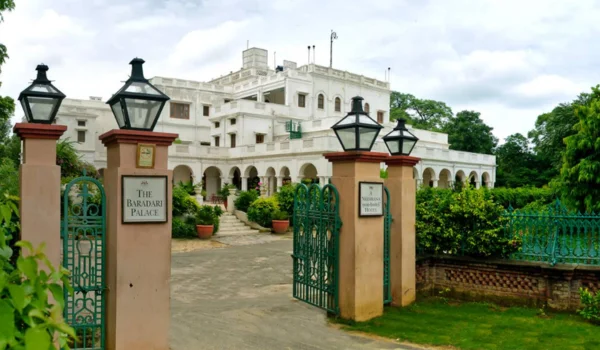
Rajendra Palace, also known as Rajindra Kothi or Baradari Palace, is a historic royal property located in Patiala, Punjab. Set within the famous Baradari Gardens, the palace represents the colonial-era architectural character of Patiala’s royal heritage.
The property has an especially interesting story because it has moved beyond its original royal use and has been restored and adapted as a heritage hotel. Today, it is known as The Baradari Palace – 19th Century, Patiala, operated by Neemrana Hotels.
For Corporate Palace, Rajendra Palace is an excellent example of how an old royal property can be connected with heritage tourism, hospitality, weddings, events, food, accommodation and business opportunities.
Quick Information
| Information | Details |
| Palace Name | Rajendra Palace / Rajindra Kothi |
| Present Name | The Baradari Palace – 19th Century |
| Location | Baradari Gardens, Patiala, Punjab |
| Built | 1876 |
| Associated With | Maharaja Rajinder Singh |
| Architectural Style | Colonial with Sikh-Mughal influences |
| Property Type | Historic Palace / Heritage Hotel |
| Garden | Baradari Gardens |
| Present Use | Heritage hospitality |
| Famous For | Royal architecture, gardens and heritage experience |
| Best Time to Visit | October to March |
The National Mission on Monuments and Antiquities records the Baradari Palace as a built heritage site in Patiala dating to 1876.
Where Is Rajendra Palace Located?
Rajendra Palace is located in Baradari Gardens in Patiala, Punjab. The gardens are situated in the northern part of old Patiala, outside Sheranwala Gate.
The official address of the present Baradari Palace heritage hotel is:
Baradari Gardens, Patiala, Punjab – 147001.
The location is also convenient for visitors exploring other important heritage attractions of Patiala.
History of Rajendra Palace
Rajendra Palace is closely associated with Maharaja Rajinder Singh of Patiala.
The palace was designed in 1876 by Kaur Sahib Ranbir Singh, the younger brother of Maharaja Rajinder Singh. The National Mission on Monuments and Antiquities describes the building as a white, colonnaded structure centred around a rectangular Sikh-Mughal-style baradari.
The palace and surrounding gardens formed part of Patiala’s royal landscape during the late 19th century.
Over the years, the property served several purposes. It housed the Shahi Mehmandari, or state guest house, later accommodated Punjabi University and subsequently housed the Punjab State Archives from 1972 to 2006.
This changing use makes Rajendra Palace an interesting example of how historic properties can adapt to different periods without completely losing their heritage character.
Rajendra Palace Architecture
Rajendra Palace has a different character from the extremely grand palace complexes found elsewhere in India.
Its architecture combines:
- Colonial influences
- Sikh architectural elements
- Mughal-inspired features
- White colonnaded façades
- Large verandahs
- High ceilings
- Spacious rooms
- Garden-facing areas
- Decorative doors and windows
The official heritage documentation describes the building as significant colonial architecture while also noting its Sikh-Mughal-style central baradari.
This combination gives the palace a distinctive identity within Patiala’s royal architecture.
What Is Special About Rajendra Palace?
The biggest attraction of Rajendra Palace is its combination of royal history and adaptive reuse.
Instead of remaining only as a historic structure, the building was restored and transformed into a heritage hospitality property.
The present Baradari Palace describes itself as a restored 19th-century garden palace where visitors can experience the architectural character and hospitality associated with historic Patiala.
This makes it particularly relevant for people interested in:
- Heritage architecture
- Royal history
- Hospitality
- Heritage hotels
- Tourism
- Interior design
- Property restoration
Baradari Gardens and Rajendra Palace
The palace is closely connected with Baradari Gardens, which surround the property.
The Government of Punjab describes the gardens as being laid out under Maharaja Rajinder Singh, with rare trees and shrubs, colonial buildings, a marble statue of Maharaja Rajinder Singh and the historic Fern House.
The name Baradari comes from the twelve-door pavilion associated with the complex.
The gardens add significant value to the palace because visitors experience not just a historic building but a much larger landscaped heritage setting.
Rajendra Palace as a Heritage Hotel
One of the most interesting chapters in the history of Rajendra Palace is its transformation into a heritage hotel.
Today, the property operates as The Baradari Palace – 19th Century, Patiala, under Neemrana Hotels. The official property information describes it as a restored 19th-century garden palace spread within the Baradari Gardens.
The property includes heritage rooms, gardens, dining facilities and hospitality services.
This is a strong example of adaptive reuse, where a historic structure receives a modern commercial purpose while retaining important architectural and cultural features.
Rooms and Accommodation
The heritage hotel offers rooms and suites named after members of Patiala’s royal family.
The property highlights features such as:
- Garden-view verandahs
- High ceilings
- Heritage interiors
- Traditional furniture
- Private bathrooms
- Air conditioning and heating
- Wi-Fi
- Parking
The official property information also states that the property has 24-hour reception and offers different room configurations.
Food and Dining at Rajendra Palace
The present Baradari Palace also operates dining facilities.
Its restaurant serves primarily North Indian cuisine, along with selected Chinese and Continental dishes.
This adds another business dimension to the palace property.
A heritage building can generate revenue not only through accommodation but also through:
- Restaurants
- Cafés
- Food services
- Special dining experiences
- Private functions
- Hospitality packages
Rajendra Palace for Weddings and Events
The conversion of Rajendra Palace into a heritage hotel has also created opportunities for weddings and private events.
The property’s official information specifically promotes the palace as a destination for weddings and celebrations. It also provides arrangements for exclusive events and conference equipment.
This makes the property relevant to the wider wedding and events industry.
Businesses connected with such events can include:
- Event planners
- Wedding decorators
- Caterers
- Photographers
- Florists
- Entertainment providers
- Transportation companies
- Hospitality staff
- Event production companies
Why Is Rajendra Palace Important for Businesses?
Rajendra Palace provides a strong example of how heritage properties can become economically useful in the modern period.
Its transformation from a royal property into a heritage hotel creates business opportunities in several sectors.
Hospitality
Accommodation and food services provide direct commercial activity.
Tourism
Visitors travelling to Patiala create demand for hotels, transportation, guides and local experiences.
Weddings
The heritage setting can attract destination weddings and private celebrations.
Events
Historic architecture and landscaped grounds can provide an attractive setting for selected events.
Heritage Conservation
Commercial use can help generate resources for maintaining historic buildings when managed responsibly.
This is one of the strongest reasons to feature Rajendra Palace on Corporate Palace.
Rajendra Palace and Heritage Property Investment
Rajendra Palace also demonstrates an important concept in the heritage property sector: adaptive reuse.
Instead of treating an old palace only as a monument, a suitable historic property can potentially be converted into:
- Heritage hotels
- Boutique accommodation
- Restaurants
- Cultural spaces
- Event venues
- Museums
- Premium tourism experiences
However, heritage properties require careful planning because commercial development has to balance business needs with architectural conservation and historical value.
Best Time to Visit Rajendra Palace
For exploring Patiala’s heritage attractions, October to March is generally a comfortable period because the weather is more suitable for outdoor sightseeing.
Visitors can also combine the palace with Baradari Gardens and other historic attractions in Patiala.
If the purpose of the visit is dining, accommodation or an event, it is better to check the property’s current availability and policies beforehand.
How to Reach Rajendra Palace
By Road
Rajendra Palace is located in central Patiala and can be reached by road using taxis, local transport and private vehicles.
By Train
The Government of Punjab notes that Patiala Railway Station is approximately 1 km from Baradari Gardens.
By Air
The nearest major airport is Chandigarh Airport, according to the Patiala district administration.
Nearby Places
Visitors exploring Rajendra Palace can also consider visiting:
- Baradari Gardens
- Sheesh Mahal
- Moti Bagh Palace
- Qila Mubarak
- Patiala heritage areas
- Adalat Bazaar
- Gurdwara Dukh Nivaran Sahib
The Patiala district administration lists Baradari Gardens, Sheesh Mahal and Moti Bagh Palace among the city’s important tourist attractions.
Rajendra Palace for Heritage Tourism
Rajendra Palace is an excellent example of Patiala’s royal heritage being connected with modern tourism.
The surrounding Baradari Gardens, palace architecture, historic interiors and present-day hospitality experience together create a distinctive heritage tourism product.
For Patiala, properties like this can support a wider tourism ecosystem involving:
- Hotels
- Restaurants
- Local transportation
- Tour operators
- Heritage guides
- Handicraft sellers
- Wedding businesses
- Photography services
The palace therefore has significance beyond the building itself.
Things to Know Before Visiting
- Rajendra Palace is now known as The Baradari Palace – 19th Century.
- It operates as a heritage hotel rather than simply as a conventional public monument.
- Visitors interested in dining should check availability in advance.
- Hotel guests should follow the property’s check-in and check-out policies.
- Weddings and large events require advance arrangements.
- Some areas may be restricted to hotel guests or booked events.
- Respect the heritage character of the property and gardens.
FAQs
- Where is Rajendra Palace located?
Rajendra Palace, also known as Rajindra Kothi, is located in Baradari Gardens, Patiala, Punjab.
- Who built Rajendra Palace?
The palace was commissioned by Maharaja Rajinder Singh and was designed in 1876 by Kaur Sahib Ranbir Singh.
- What is Rajendra Palace called today?
The historic property is now operated as The Baradari Palace – 19th Century, Patiala, a heritage hotel by Neemrana Hotels.
- Is Rajendra Palace a heritage hotel?
Yes. The restored palace currently operates as a heritage hotel in Patiala.
- Can weddings be held at Rajendra Palace?
Yes. The present Baradari Palace promotes the property for weddings, celebrations and other events, subject to its booking policies.
- What is Rajendra Palace famous for?
Rajendra Palace is known for its 19th-century architecture, connection with Maharaja Rajinder Singh, location within Baradari Gardens and its successful transformation into a heritage hospitality property.
Final Thoughts
Rajendra Palace, or Rajindra Kothi, is a fascinating example of Patiala’s royal heritage. Built in 1876 and closely connected with Maharaja Rajinder Singh, the property combines colonial architecture with Sikh-Mughal influences and the landscaped beauty of Baradari Gardens.
Its transformation into The Baradari Palace – 19th Century makes the property even more interesting from a business perspective. It shows how an old royal building can be carefully restored and given a modern role through hospitality, tourism, dining, weddings and events.
For Corporate Palace, Rajendra Palace is therefore not just another palace article. It is a practical example of how heritage and business can work together while preserving the character of a historic property.